Charging Curve Explained – Dive Down On Optimum Charging Rate for Popular EVs

-full_normal.webp)
The Malaysian Electric Vehicle (EV) market, while still in its infancy, is undoubtedly a quickly rising market that is gaining significant traction. However, due to the government's no EV under RM100,000 regulation, we have only seen EVs starting at that price point, ranging from BYD's Dolphin to the ultra-luxurious Rolls-Royce Spectre.
Having said that, we believe one of the reasons for this price floor is to ensure that the EV infrastructure is fully operational before releasing entry-level EVs such as the Wuling or future models from Proton and Perodua. Remember the 10,000 chargers by 2025 aim that we've been talking about lately?
Anyhow, putting aside the public EV chargers volume or lack of aside, one of the key important knowledge that everyone must comprehend and follow would be the characteristics of their EV of choice. By this we don’t mean your EVs 0-100 KM/H sprint time, or the massive amount of torque it can unleash from the get go but the vehicle's CHARGING CURVE which would help you optimise your journey, save time and money.

The charging curve of an electric vehicle is determined by its battery and cooling capacity. Remember that, unlike AC charging, DC charging directly pushes high wattage current into the battery at a high rate, causing your EV's battery to heat up, and that continual DC charging will result in a decline in battery performance over time. As a result, it is always recommended to stick to AC charging and only use DC for long interstate travels or when a quick top-up is required.
DC charging is also recommended up to 80% state of charge (SOC), after which the charging rate rapidly reduces, implying that you would theoretically be charging the last 20% over a longer period of time at a slower pace. Now, let's look at ten (10) popular and new EV models in Malaysia, as well as their optimal charging curves, according to the Electric Vehicle Sharing Knowledge website.
BYD Atto 3 Extended

The BYD Atto 3 Extended comes with a Blade 60.48 kWh battery and has an average charging speed of 57.5kW from 10% to 100% and a higher 71.8kW from 10% to 80%. The charging speed of the BYD Atto 3 reaches a peak of 85kW.
Kia EV6 GT Line

The Kia EV6 GT Line, which runs on an 800V architecture, has a Lithium-Ion 77.4kWh battery pack that delivers an average of 112.3kW when charged from 10% to 100%, and 191.6kW when charged from 10% to 80%. The charge reaches a maximum of 234kW.
Mercedes Benz EQS 500 4Matic

This luxury people mover, EQS500 is powered by a 120kWh Lithium-Ion battery pack with an average charging capacity of 74.9kW when charged from 10% to 100%. This increases to 152.7kW if users charge at 80% instead of 10%, with charging peaks at 207kW.
Volvo C40 Recharge Pure Electric

This 78kWh Lithium-Ion battery fitted Swedish bestseller, Volvo C40 charges from 10% to 100% at an average of 69kW, while charging from 80% to 100% averages 118.5kW with a peak charge of 210kW.
BMW iX40

The BMW iX40, which is quite popular in Malaysia, has Lithium-Ion 76.7kWh battery chargers that charge from 10% to 100% at an average of 66.2kW and from 10% to 80% at an average of 86.7kW with a peak charge of 149kW.
smart #1 Brabus

The smart #1 Brabus, which has been gaining popularity in recent months and will be formally priced next month, will include a Lithium-Ion 66kWh battery. According to statistics from its charging curve, charging from 10% to 100% averages a low 44.4kW, but charging from 80% to 100% doubles the average to 87kW, with a peak charging of an astounding 150kW.
Tesla Model Y Long Range (LR)

Though there isn't a single official Tesla Model Y on the road yet, many grey import models exist, and we expect this model to be one of the greatest sellers in the EV space. The Model Y LR would have a 75kWh Lithium-Ion battery that could charge from 10% to 100% at an average of 68.9kW, while 10% to 80% would achieve a better average of 101.2kW, with a peak charging of an astonishing 250kW.
Porsche Taycan

The NMC 79.2kWh battery pack in this luxury premium sports tourer produces an average of 88.8kW when charged from 10% to 100%. If the charge is reduced to 80%, the average rises to 156.5kW. The peak charging capacity of the Taycan is 222kW.
Hyundai Ioniq 5 Max

The Ioniq 5 Max all-wheel drive is outfitted with a 72.6kWh Lithium-Ion battery capable of delivering an average 112.3kW when charged from 10% to 100%. If the user keeps the charge to a maximum of 80%, this value nearly doubles to 191.6kW. The Ioniq 5 has a max output of 234kW.
Audi Q8 e-Tron 50

Audi Q8 e-Tron 50 despite its recent arrival, the Audi is earning favourable reviews and is one of the more attractive EVs on the market. The e-Tron would be equipped with a 95kWh NMC battery as standard. Charging from 10% to 100% would result in an average of 116.6kW, whereas charging from 10% to 80% would result in an average of 138.9kW, peaking at 153kW.
After quickly reviewing the charging characteristics of a small sample of ten models, we can clearly understand that adhering to the optimal charging habit will considerably benefit customers, particularly in terms of time savings. This is one of the key reasons why the golden plug-out number of 80% was established, which also means that users would hog the DC chargers less and move along giving other EV users a chance to charge their vehicles.
Gallery


Written By
Kumeran Sagathevan
More then half his life spend being obsessed with all thing go-fast, performance and automotive only to find out he's actually Captain Slow behind the wheels...oh well!


JPJ Running Numbers
KUALA LUMPUR
VRS2271
SELANGOR
BSU1401
JOHOR
JF384J
PULAU PINANG
PSF9490
PERAK
APL8039
PAHANG
CFH8716
KEDAH
KGJ3035
NEGERI SEMBILAN
NEM1410
KOTA KINABALU
SJU3520
KUCHING
QAB6589P
Last updated 30 Sep, 2026
Fuel Price
Petrol
RON 95
RM 3.97
+1.38
RON 97
RM 4.90
+1.75
RON 100
RM 7.20
+2.20
VPR
RM 8.23
+2.00
Diesel
EURO 5 B10
RM 5.12
+2.08
EURO 5 B7
RM 5.32
+2.08
Last updated 30 Apr, 2026
Related News
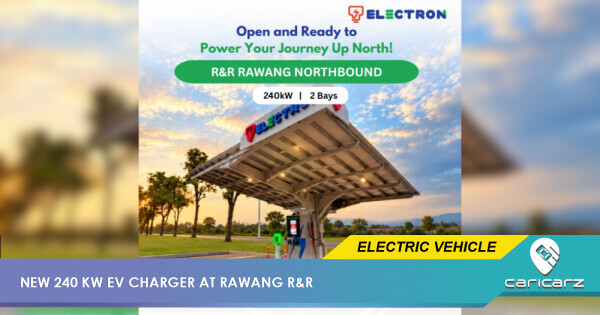
Driving Up North In An EV? There's A New 240 kW Charger At Rawang R&R
TNB Electron's new 240 kW DC EV charger at R&R Rawang Northbound is now live, with free charging available until 29 Sept 2026.

28-09-2026
Malaysia's Electricity Protection Is Now 800 kWh - How Much Power Does An EV Use Per 100 KM?
Malaysia's electricity protection threshold is now 800 kWh. Here's how much electricity popular EVs use per 100 km and what the extra 200 kWh means.
18-09-2026

EV 'Fuel' Hike: How To Use TNB’s Off-Peak Rates To Dodge The Upcoming August Surcharge
Electricity bills are rising. As the TNB AFA rate flips to a +1.38 sen surcharge in May 2026, find out how to dodge the upcoming +3.93 sen spike using the Time of Use (ToU) scheme and the 600kWh exemption.
08-05-2026

Pekema Partners Aquateak Energy To Establish SenangCas
Newly established SenangCas, a joint venture between Pekema and Aquateak Energy, enters local EV charging operators space.

09-07-2025

ChargeSini, Sunway And Huawei Enter Tri-Party MoU Agreement
ChargeSini, Sunway, and Huawei formalises tri-party MoU agreement at Malaysia Autoshow 2024 (MAS 2024) to accelerate EV charging infrastructure development.
29-05-2024

ChargeSini and Charge+ Largest EV Charging Roaming Agreement - Malaysia & Singapore
ChargeSini enters roaming partnership with Singapore’s Charge+ to offer greater convenience for EV performing cross-border travels.
05-04-2024

Tint With Raytech Films And Get 500 FREE ChargeSini Credits!
Get rewarded with 500 FREE ChargeSini credits - worth RM500 - by tinting your vehicle at any Raytech Films outlet today!
04-03-2024

Wireless EV Chargers - The Future Of EV Charging?
Wireless EV Charging technology is getting a lot of limelight of late, and it could prove to be the future of EV chargers.
22-02-2024
Latest News
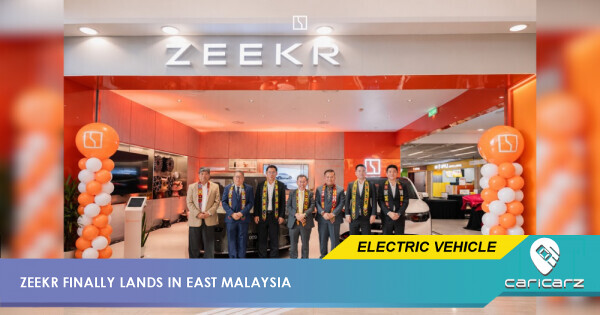
Kuching Gets Zeekr's First East Malaysia Store, With More Coming Next Year
Zeekr opens its first East Malaysia retail location at The Spring Kuching, with permanent sales and service centres targeted for Q1 2027.
29-09-2026
Buying A Hybrid Or EV? MAA Proposes Up To RM10,000 Tax Rebate
MAA proposes a RM7,000-RM10,000 income tax rebate for hybrid and EV buyers under Budget 2027, plus incentives for home charging and old-car scrapping.
28-09-2026
Driving Up North In An EV? There's A New 240 kW Charger At Rawang R&R
TNB Electron's new 240 kW DC EV charger at R&R Rawang Northbound is now live, with free charging available until 29 Sept 2026.
28-09-2026
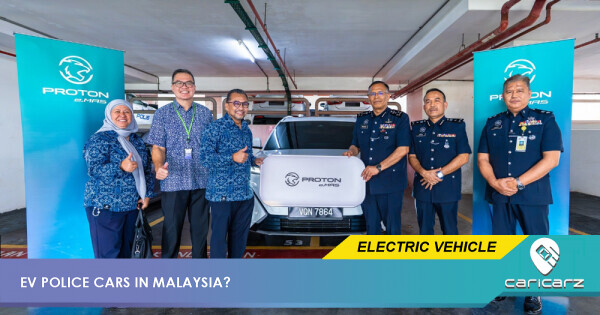
Could An EV Really Work As A Malaysian Police Car? PDRM Is Finding Out
PDRM is testing the Proton e.MAS 5, e.MAS 7 EV and e.MAS 7 PHEV to see whether electrified vehicles could work for Malaysian police duties.
18-09-2026
Malaysia's Electricity Protection Is Now 800 kWh - How Much Power Does An EV Use Per 100 KM?
Malaysia's electricity protection threshold is now 800 kWh. Here's how much electricity popular EVs use per 100 km and what the extra 200 kWh means.
18-09-2026
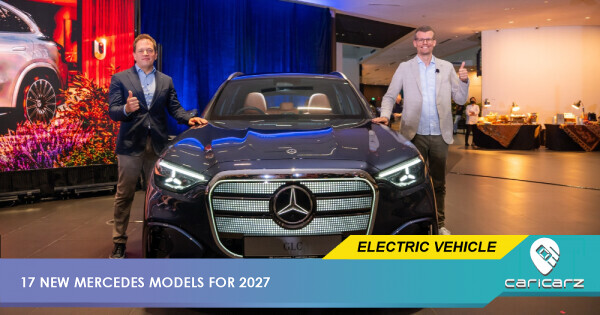
17 New Mercedes Models Are Coming To Malaysia In 2027 - Here's What We Know
Mercedes-Benz Malaysia plans 17 new models for 2027, with most set for local assembly in Pekan. Here's what we know about its ICE and EV plans.
17-09-2026
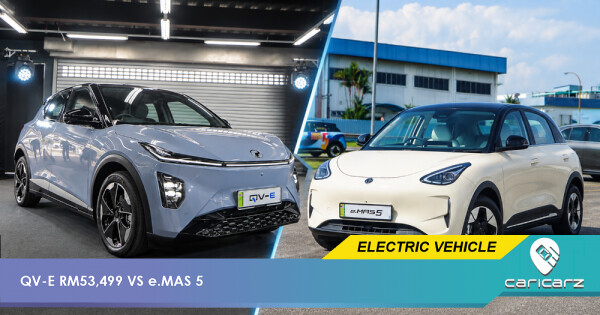
Perodua QV-E Now At RM53,499 Vs Proton e.MAS 5: Which Makes More Sense?
Perodua QV-E now starts at RM53,499 with BaaS under its Malaysia Day promo. See how it compares with the Proton e.MAS 5 on price, range, charging and features.
16-09-2026
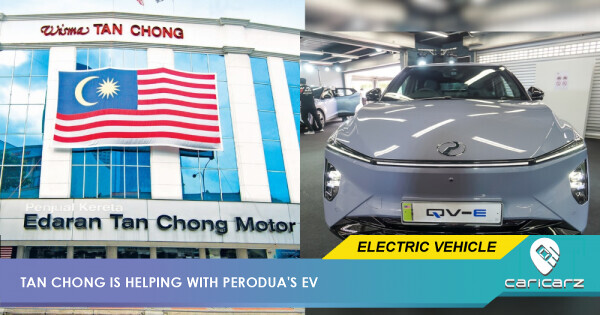
Yes, Tan Chong Is Involved In Perodua's EV. Here's What It's Actually Doing
Tan Chong has signed a three-year agreement to support Perodua's EV production with ED coating, painting and assembly-line services.
15-09-2026
Show More
trending_flat