Japan Rebadging A Malaysian EV? How Daihatsu Could Use Perodua’s QV-E Platform
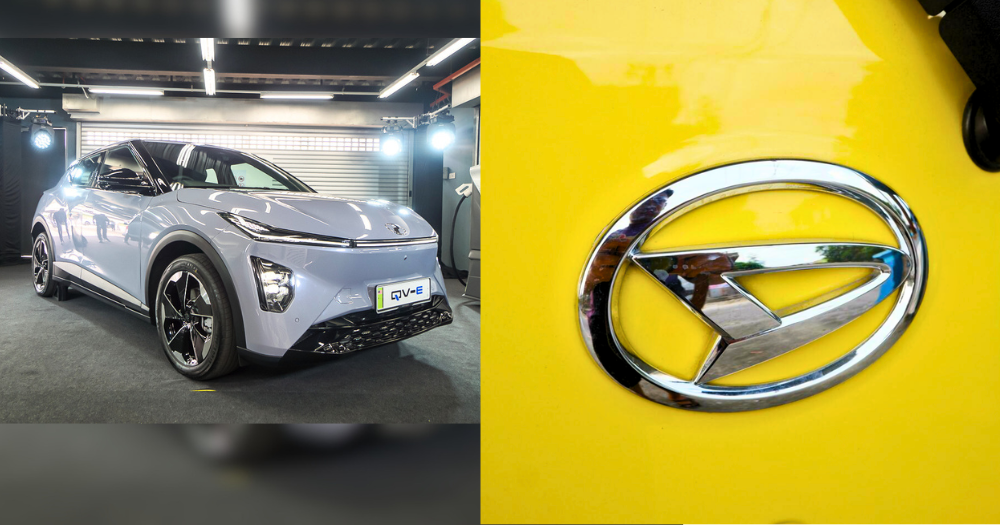
What if the next Daihatsu you see on the road isn't actually Japanese, but engineered right here in Malaysia? That scenario is closer to reality than you think. Following bilateral trade meetings between Malaysia's MITI and Japan's Ministry of Economy, Trade and Industry (METI), official talks opened regarding a joint "Daihatsu-Perodua EV partnership."
With Perodua having already poured RM800 million into building its modular QV-E EV architecture independently, Japan's small-car specialist is now eyeing homegrown Malaysian tech to power its own sub-compact electric lineup.
- Historical Shift: After 33 years of rebadging Japanese models, Perodua may supply EV architecture back to Daihatsu and Toyota.
- Homegrown Architecture: Perodua developed its modular EV platform (underpinning the B-segment QV-E crossover) independently alongside engineering consultant Magna Steyr.
- Regional Pressure: Daihatsu’s lack of small, affordable EVs makes it vulnerable to Chinese EV brands in key export markets like Indonesia.
- AFTA Advantage: Utilizing Malaysia’s high local content permits tax-free exports across ASEAN under regional trade agreements.
Why Perodua Built Its Own EV Architecture
Perodua's shift into independent platform design stemmed from necessity. When the Malaysian government outlined national electrification goals, Daihatsu did not have an existing compact battery electric vehicle (BEV) platform suitable for Perodua to adopt. Outside of niche models like the lease-only Ativa Hybrid (based on the Rocky e-Smart Hybrid), Daihatsu's global lineup remained focused on internal combustion engines and light hybrids.
Instead of waiting for top-down platform sharing, Perodua invested roughly RM800 million and over 266,000 man-hours to develop its own modular EV architecture. Sourcing expertise from global automotive specialist Magna Steyr as a technical consultant, Perodua engineered a scalable platform capable of supporting A- and B-segment hatchbacks, sedans, and SUVs.
This effort culminated in the Perodua QV-E, a 204 PS (150 kW) B-segment sportback crossover equipped with a 52.5 kWh LFP battery pack.
For 33 years, Perodua built its reputation on Japanese donor architectures. Daihatsu’s request to join Perodua's homegrown EV platform development marks the ultimate role reversal—proving that Malaysian automotive R&D has matured from a regional assembler into a high-value engineering power.
Two Potential Scenarios For The Daihatsu-Perodua EV Partnership
As highlighted by Paul Tan’s Automotive News, while no public partnership had previously existed for Perodua's in-house EV development, the recent discussions between MITI Minister Datuk Seri Johari Abdul Ghani and Japan's Vice-Minister Takuo Komori point toward two fascinating possibilities for how this collaboration could play out:
| Partnership Scenario | Strategic Execution |
|---|---|
| 1. Direct Rebadging Export Model | Daihatsu simply rebadges the Perodua QV-E (or an upcoming smaller sibling) under the "D" badge. |
| 2. Joint Co-Development R&D Integration | Toyota & Daihatsu participate directly in Perodua's future EV development to co-engineer next-gen models. |
1. Direct Rebadging: Fighting Chinese EV Expansion in ASEAN
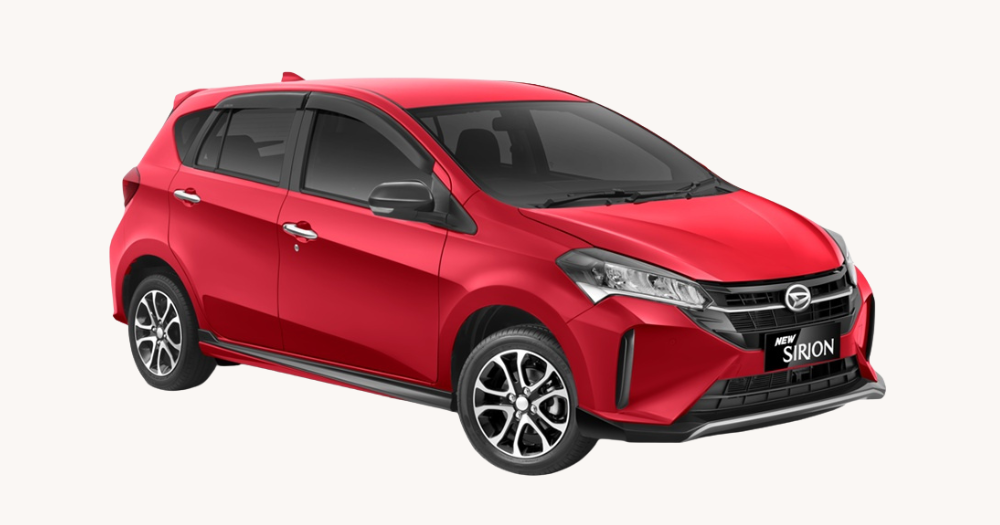
Daihatsu rebadging a Perodua isn't unusual, the Daihatsu Sirion sold in Indonesia is effectively a Malaysian-built Myvi.
What makes this intriguing is Daihatsu's vulnerability in overseas markets like Indonesia, where Chinese EV brands like BYD are rapidly capturing market share. Because Daihatsu currently lacks a proprietary compact EV platform, rebadging Perodua's homegrown QV-E offers Japan an immediate weapon to respond. Furthermore, utilizing Malaysia’s high local content allows these EVs to benefit from reduced tariffs under the ASEAN Free Trade Area (AFTA) agreement.
2. Joint Co-Development: Scaling Tech & Lowering City EV Costs
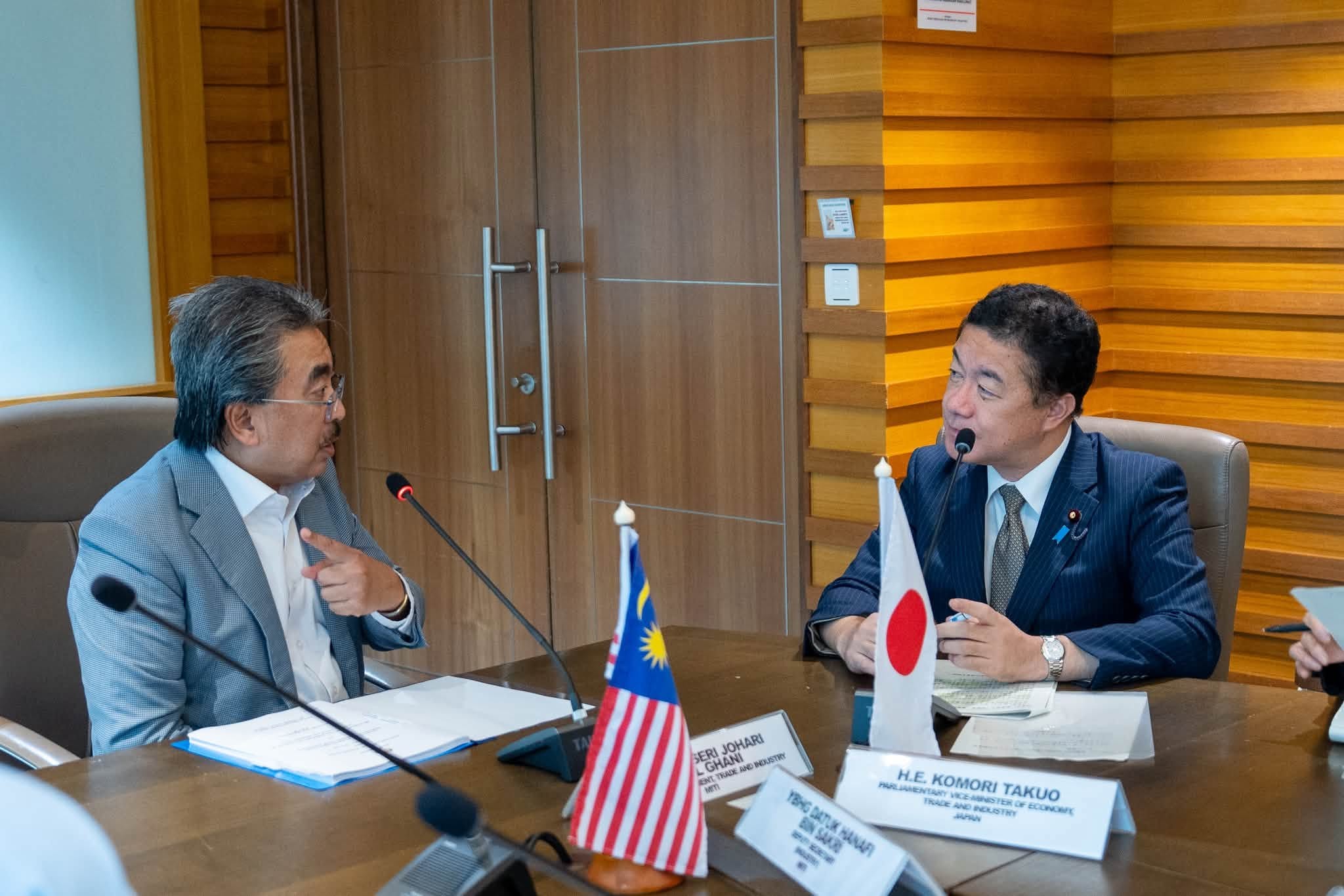
The second outcome stems from earlier comments by Perodua President and CEO Datuk Seri Zainal Abidin Ahmad, who confirmed that both Daihatsu and Toyota had expressed interest in joining Perodua's EV projects.
EV development is expensive and difficult to fully amortise solely through low-margin compact cars. Securing Toyota and Daihatsu as platform clients enables Perodua to scale production and lower manufacturing costs. This move could accelerate the development of Perodua’s planned smaller A-segment EV platform, potentially giving us a true mass-market, sub-RM60k "Electric Axia" class vehicle.
“If you ask me, the learning process is really expensive, and it’s hard for us to recover 100% of the investment, unlike how we do it with ICE cars. But I feel proud of our people that we can develop a car and that it has opened their [Daihatsu and Toyota] eyes, and they’re now talking about collaboration,” Zainal said.
What Japanese Input Means For Future Perodua Models
At the end of the day, automotive partnerships boil down to one thing for everyday buyers: cost and quality. Developing electric cars independently is brutally expensive, but sharing this homegrown platform with global heavyweights like Toyota and Daihatsu gives Perodua the massive scale it needs.
By spreading R&D costs across thousands of extra export units, Perodua gets much closer to cracking the holy grail of local motoring: a ultra-accessible, sub-RM60k "Electric Axia" city runner. If Daihatsu's involvement gives us better plastics and lower price tags, sign us up.
Written By
Sofea Najmi
A Bachelor of English Language and Literature graduate with an obsession for the finer details. Sofea uses her background in translation to decode the technicalities of automotive innovation. She is dedicated to delivering impactful, meticulously researched articles that provide a narrative far beyond the spec sheet. LinkedIn: https://bit.ly/3C018vv
JPJ Running Numbers
KUALA LUMPUR
VRS2271
SELANGOR
BSU1401
JOHOR
JF384J
PULAU PINANG
PSF9490
PERAK
APL8039
PAHANG
CFH8716
KEDAH
KGJ3035
NEGERI SEMBILAN
NEM1410
KOTA KINABALU
SJU3520
KUCHING
QAB6589P
Last updated 30 Sep, 2026
Fuel Price
Petrol
RON 95
RM 3.97
+1.38
RON 97
RM 4.90
+1.75
RON 100
RM 7.20
+2.20
VPR
RM 8.23
+2.00
Diesel
EURO 5 B10
RM 5.12
+2.08
EURO 5 B7
RM 5.32
+2.08
Last updated 30 Apr, 2026
Related News
Perodua QV-E Now At RM53,499 Vs Proton e.MAS 5: Which Makes More Sense?
Perodua QV-E now starts at RM53,499 with BaaS under its Malaysia Day promo. See how it compares with the Proton e.MAS 5 on price, range, charging and features.
16-09-2026
Yes, Tan Chong Is Involved In Perodua's EV. Here's What It's Actually Doing
Tan Chong has signed a three-year agreement to support Perodua's EV production with ED coating, painting and assembly-line services.
15-09-2026
Perodua QV-E Expands Nationwide: First Units Arrive in Sabah and Sarawak
Perodua has confirmed the QV-E is arriving in Sabah and Sarawak on July 15, 2026. Discover the new pricing, localized ownership models, and what the national EV rollout means for East Malaysian drivers.
26-06-2026
Perodua Slashed Its QV-E Monthly Battery Costs To RM215 (And 3 Other Pricing Wins You Need To Know)
Perodua has officially restructured its QV-E EV pricing! Discover how local vendor manufacturing dropped monthly battery leasing costs to an affordable RM215, alongside a limited-time RM6,500 full-loan rebate loophole.
16-06-2026
UTM Students Are Getting a Fast-Track to Becoming EV Engineers
UTM and Perodua launch a 5-year xEV Engineering Programme. Top students get a fast-track to becoming EV engineers with IMI certification and hands-on experience with the Perodua QV-E.
22-04-2026
Perodua QV-E Sales Outlets Now Expanded to 34 Locations
Perodua has expanded the number of sales outlets for its QV-E EV to 34 locations from the original 9 outlets.
19-12-2025
Perodua: “Shariah-Compliant Use” Clause Fixed in QV-E BaaS Plan
Perodua says a Shariah-compliance clause in its QV-E BaaS lease was mistakenly included.
03-12-2025
Perodua Projected to Record 359,000 Units of Vehicle Sales This Year
Perodua is now on track to break its sales record this year, with 359,000 units projected for 2025.
02-12-2025
Latest News
Kuching Gets Zeekr's First East Malaysia Store, With More Coming Next Year
Zeekr opens its first East Malaysia retail location at The Spring Kuching, with permanent sales and service centres targeted for Q1 2027.
29-09-2026
Buying A Hybrid Or EV? MAA Proposes Up To RM10,000 Tax Rebate
MAA proposes a RM7,000-RM10,000 income tax rebate for hybrid and EV buyers under Budget 2027, plus incentives for home charging and old-car scrapping.
28-09-2026
Driving Up North In An EV? There's A New 240 kW Charger At Rawang R&R
TNB Electron's new 240 kW DC EV charger at R&R Rawang Northbound is now live, with free charging available until 29 Sept 2026.
28-09-2026
Could An EV Really Work As A Malaysian Police Car? PDRM Is Finding Out
PDRM is testing the Proton e.MAS 5, e.MAS 7 EV and e.MAS 7 PHEV to see whether electrified vehicles could work for Malaysian police duties.
18-09-2026
Malaysia's Electricity Protection Is Now 800 kWh - How Much Power Does An EV Use Per 100 KM?
Malaysia's electricity protection threshold is now 800 kWh. Here's how much electricity popular EVs use per 100 km and what the extra 200 kWh means.
18-09-2026
17 New Mercedes Models Are Coming To Malaysia In 2027 - Here's What We Know
Mercedes-Benz Malaysia plans 17 new models for 2027, with most set for local assembly in Pekan. Here's what we know about its ICE and EV plans.
17-09-2026
Perodua QV-E Now At RM53,499 Vs Proton e.MAS 5: Which Makes More Sense?
Perodua QV-E now starts at RM53,499 with BaaS under its Malaysia Day promo. See how it compares with the Proton e.MAS 5 on price, range, charging and features.
16-09-2026
Yes, Tan Chong Is Involved In Perodua's EV. Here's What It's Actually Doing
Tan Chong has signed a three-year agreement to support Perodua's EV production with ED coating, painting and assembly-line services.
15-09-2026
Show More
trending_flat