Beyond the Battery: The 4 Silent Range-Killers That Your Dashboard Can't Predict


We are officially six days into the 2026 Raya season, and for thousands of Malaysians, the focus has shifted from the Balik Kampung excitement to the high-stakes journey back to the city. By now, you’ve likely navigated a few charging stops and planned your R&R breaks. Your dashboard might even proudly display a "350km" range for your 250km trip home. You have a 100km buffer. You’re safe, right?
Wrong.
Just days ago, a viral "Raya Drama" shared on Threads served as a brutal wake-up call for the EV community. Despite starting with a massive 100km+ buffer, one driver found themselves being towed just 7km short of their charging port. The culprit? A lethal mix of heavy passengers, the steep climbs of Bukit Karak, and a "sedap menekan" (heavy-footed) driving style.

Despite starting the trip with a massive 100km safety net, an EV driver shared his experience being towed just 7km from his charger on Thread.
Before you start your return journey, you need to understand the “Brutal Truth”: Your car's dashboard range is an estimate based on the past, not a prophecy of the future.
Here are the four silent killers that your dashboard can’t predict, and how to survive the trip back.
1. The "Payload Tax": Why Family Trips Cost More
Most EV range figures are tested with a single driver and minimal load. But a trip to Terengganu or Penang usually involves 5 adults plus a trunk full of baju raya, kuih, cameras, and luggage.
- The Science: According to a recent real-world driving study, a 15% increase in vehicle weight, roughly the weight of 3-4 passengers, causes a 4–9% rise in energy consumption at the wheels. However, for a fully loaded family trip (5 adults + luggage), you are likely increasing your weight by over 20%. The study found that while weight itself is a factor, the biggest "tax" comes from acceleration. Doubling your acceleration intensity with that extra weight can slash your battery efficiency by up to 20.8%.
- The Impact: When you combine a heavy payload with the frequent stop-and-go acceleration of Raya traffic or overtaking on single-lane roads, your real-world range can easily drop by 15–18%.
- The Reality Check: If your car says 400km but you’re carrying the whole family and driving "normally," you should mentally "delete" 60km to 70km before you even shift into Drive. Physics is a strict accountant, and she charges extra for every heavy-footed exit from a toll plaza.
2. The Elevation "Interest Rate": The Karak Factor
Lebuhraya Karak is the ultimate EV trap. Your dashboard sees the distance to the next charger, but it often ignores the vertical distance.
- The Science: Climbing a steep incline like the Genting Sempah pass requires a massive, sustained draw of current. While regenerative braking helps on the way down, it typically only recovers about 60–70% of what you spent going up due to heat and conversion losses.
- The Impact: On a steep, sustained climb, your instantaneous energy consumption (Wh/km) can double or triple compared to driving on a flat stretch of the PLUS highway. This is why a 100km "flat road" buffer can dwindle rapidly when the road points toward the sky.
- The Reality Check: Gravity is a debt that must be paid upfront. If your route involves significant climbing, like the journey through Bentong or Gombak, don't trust a "safe" buffer calculated on flat ground. For every major hill on your route, assume your battery is working twice as hard as the dashboard thinks.
3. The "Square of Speed": The Highway Efficiency Trap
In the city, EVs are kings of efficiency. On the highway, physics fights back.
- The Science: Aerodynamic drag is the biggest enemy of range. Drag doesn’t increase linearly with speed; it increases with the square of speed. Driving at 120km/h creates significantly more resistance than driving at 90km/h.
- The Impact: In the 35°C Malaysian heat, with your AC on "Full Blast" to keep 5 people cool, high-speed cruising can slash your EV's efficiency.
- The Reality Check: "Sedap menekan" (speeding) to reach the R&R faster is the quickest way to ensure you never reach it at all. The time you "save" by speeding is usually lost sitting at a DC charger longer than planned.
4. The "Thermal Tax": Fighting the 35°C Heat
Even if you drive slowly, the Malaysian sun is still "stealing" your battery. In an EV, the battery doesn't just power the wheels; it powers the life-support system.
- The Science: In 35°C weather, the AC compressor must work at peak capacity to cool a cabin filled with 5 people. According to AAA, using the AC in 35°C heat can reduce your total range by an average of 17% because that energy never reaches the wheels.
- The Impact: Recent real-world fleet data reveals a "temperature cliff." While range loss is minimal at 30°C, it surges to 31% as temperatures climb toward 38°C. In the sweltering Malaysian sun, it can take 3kW to 5kW of energy just to get a "baked" cabin down to temperature. Once cooled, it still takes around 1kW just to keep it there.
- The Reality Check: Your AC compressor competes directly with your motor for energy. At highway speeds, every extra kilowatt spent on cooling is energy that could have moved you another 5km down the road. If you're running low on range, turn the AC up to 24°C and use the recirculate mode. This allows the compressor to drop into its low-draw "maintenance mode," preserving your battery for the miles that matter.
The Pro-Driver’s Survival Checklist
To ensure you don’t end up on the back of a towing truck, consider these rules:
- Trust the Wh/km, Not the KM: Switch your dashboard to show energy consumption (Wh/km). If your usual average is 150 Wh/km but you’re seeing 220 Wh/km on the highway, your range is dropping 45% faster than the car thinks.
- The "80-20" Rule: On long trips, never plan to arrive with less than 20% battery. That 20% is your "Safety Net" for traffic jams, broken chargers, or unexpected hills.
- The Cool-Down Strategy: If you realize you’re running low, don't floor it to reach the charger faster, that's a double penalty. Instead, drop your speed to 90km/h, set the AC to 24°C, and turn on recirculate. This "Eco-Hypermap" can often save you 15-20km of range, the difference between charging and towing.
Your dashboard is a calculator, not a crystal ball. It knows the battery, but it doesn't know your family, the hills of Karak, or the weight of your luggage. Respect the physics, plan for the "Reality Checks," and keep your Raya drama-free.
Tech Decoded. Truth Unloaded. Only at CarzAutomedia | CariCarz. Follow us on Facebook and Instagram.
Read: The Truth Behind ‘Low Battery’ Status at Some EV Charging Stations This Raya
Read: 5 Data-Backed Tips to Save Petrol: A Guide for Malaysian Drivers
Written By
Sofea Najmi
A Bachelor of English Language and Literature graduate with an obsession for the finer details. Sofea uses her background in translation to decode the technicalities of automotive innovation. She is dedicated to delivering impactful, meticulously researched articles that provide a narrative far beyond the spec sheet. LinkedIn: https://bit.ly/3C018vv


JPJ Running Numbers
KUALA LUMPUR
VSA4819
SELANGOR
BSV2920
JOHOR
JH7613J
PULAU PINANG
PSH5424
PERAK
APN2134
PAHANG
CFJ4636
KEDAH
KGJ9130
NEGERI SEMBILAN
NEM6571
KOTA KINABALU
SJV2938
KUCHING
QAB704Q
Last updated 23 Nov, 2026
Fuel Price
Petrol
RON 95
RM 3.97
+1.38
RON 97
RM 4.90
+1.75
RON 100
RM 7.20
+2.20
VPR
RM 8.23
+2.00
Diesel
EURO 5 B10
RM 5.12
+2.08
EURO 5 B7
RM 5.32
+2.08
Last updated 30 Apr, 2026
Latest News
BYD Flash Charging Malaysia: 9-Minute Charging, Locations And Compatible EVs
BYD Flash Charging is now in Malaysia. Explore its 1,500 kW chargers, nine-minute charging, locations, compatible EVs and nationwide expansion plans.
20-11-2026
Malaysia Commercial EV Tax Incentives: What's Available And What's Being Proposed
Malaysia is studying sales tax exemptions for electric lorries. Explore existing GITA incentives, Budget 2027 measures and their link to diesel subsidies.
19-11-2026
Malaysia's Temporary 800 kWh Electricity Bill Protection Ends December 2026: What EV Owners Should Know
Malaysia's temporary 800 kWh electricity bill protection ends Dec 31, 2026. Here's what EV owners should know about home charging and electricity tariffs.
19-11-2026
Malaysia's Proposed EV Levy Explained: Charging Infrastructure, Funding And EV Affordability
Malaysia is studying an EV levy to fund more public chargers. Explore the proposal, infrastructure challenges, Budget 2027 incentives and EV affordability.
18-11-2026
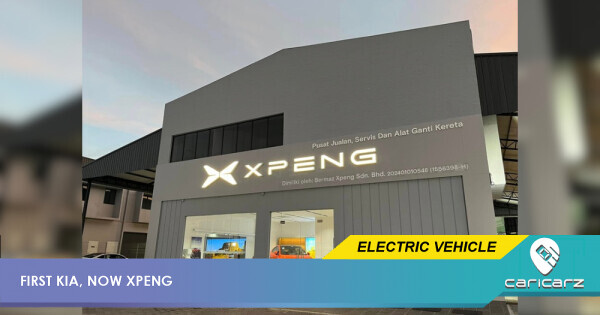
Bermaz Auto Ends XPENG Distributorship: What It Means For Malaysia's Automotive Industry
Bermaz Auto ends its XPENG distributorship in Malaysia. Explore its financial significance and the evolving role of local automotive distributors.
18-11-2026
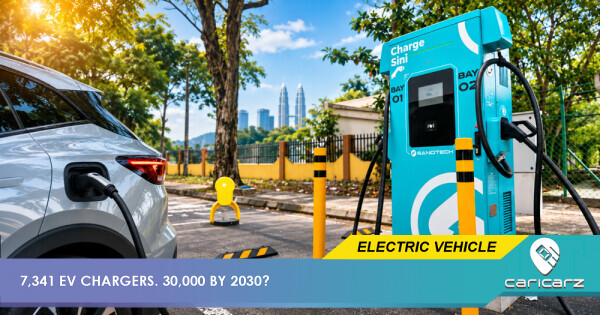
Malaysia's 30,000 EV Charger Target: 7,341 Installed As Of September 2026
Malaysia has 7,341 EV chargers but needs 22,659 more by 2030. Can faster expansion and better rural coverage close the gap?
17-11-2026
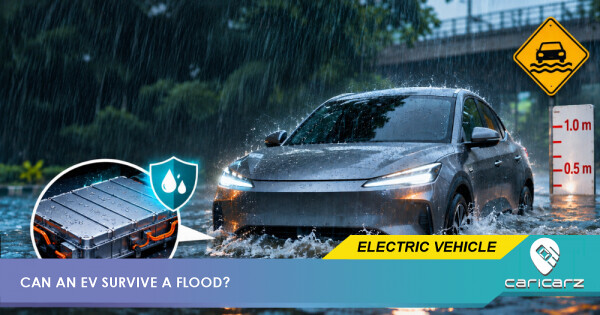
EV Flood Damage: Are Electric Car Batteries Waterproof?
Can an EV survive a flood? Learn how floodwater affects electric car batteries, what damage can occur and what Malaysian EV owners should do.
10-11-2026
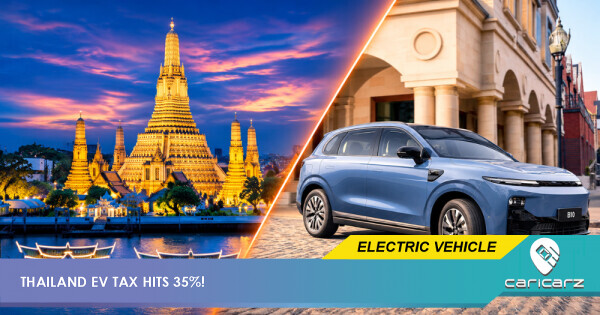
Thailand EV Import Tax Rises To 35% In 2027 — Malaysia Policy Compared
Thailand raises its EV import tax to 35% in 2027. See how Malaysia's RM200,000 CIF and 180 kW CBU EV rules compare, and what buyers should know.
04-11-2026
Show More
trending_flat
Malaysia First Used Car and EV Consignment Platform
This is the best place to sell your car at true market value. Instead of accepting low dealer trade-ins, we handle everything and connect your car directly to genuine buyers for the highest price.

Understanding CariCarzAutomall Consignment Plan


Approved 200-Check Points Inspection

7 Day Money Back Guarantee

One Year Extended Warranty
No Hidden Charge
