ST Clarifies EV Charging Licences, Individual High-Rise Charging to Follow


An engagement session with the Malaysian Energy Commission (Suruhanjaya Tenaga, ST) earlier today clarified electricity licensing requirements for EV charging systems (EVCS), particularly in high-rise and multi-occupancy buildings where compliance questions have grown as EV adoption accelerates.

ST confirmed that licensing is required whenever electricity is supplied to others, regardless of whether charging is free or paid. Even homestays or private premises that allow guest charging fall within the licensing requirement.

As of November 2025, Malaysia has 75,487 EVs on the road, with 36,690 registered in the first 11 months alone. These vehicles are served by 5,417 licensed EV chargers, roughly one charger for every 14 EVs. Total installed EV charging capacity stands at 145.3MW, reflecting rapid infrastructure growth alongside vehicle adoption.

Of these chargers, 3,569 are AC and 1,791 are DC, with DC installations already exceeding the earlier target of 1,500 units. AC growth lags due to demand patterns: many EV owners in landed properties rely on home chargers, while shared facilities in high-rise condominiums are beginning to meet AC demand for urban residents.

ST explained that EVCS licence approvals typically take up to 30 days. Processing costs are RM100, with an annual fee of RM100 or RM0.44 per kW, whichever is higher. Licences are issued for 10 years and tied to a specific location.
Licensing depends on power supply arrangements. Facilities with charging capacity of 70kW (100A) or below do not require a Public Distribution Licence (PDL), but an EVCS licence is still mandatory if electricity is distributed. For chargers on dedicated power, only one EVCS licence is required. Where supply is tapped from the existing facility directly, two licences are needed: one for the facility owner and a separate one for the EVCS operator.

Under the Federal Government Gazette Act, Section 54, public EVCS must be licensed. “Public” includes chargers accessible to consumers or employees, whether free or paid. Private-use chargers, intended solely company registered vehicle consumption, do not require a licence.
For multi-storey buildings, licensing depends on metering. A single EV kWh meter serving all floors requires one licence. Separate meters per floor require separate licences. Multiple operators in one building will also require licences based on how meters are installed.

ST is also reviewing requirements for individual multi-storey car park owners to provide EV chargers in designated bays. This policy is expected next year, marking a step toward standardising charging in high-rise developments.

Home EV users are advised to check their electrical setup. Single-phase homes may face load constraints, so owners are encouraged to upgrade to three-phase power or throttle vehicle charging. A 7kW home charger draws power equivalent to about seven household air conditioners running simultaneously.

Currently, there is no licensing requirement for battery energy storage systems (BESS), but a regulatory framework is expected in Q1 2026 to support EV charging and grid stability.

While regulatory clarity has improved, local council (PBT) processes remain a major bottleneck. Non-uniform requirements, slow approvals, and differing interpretations continue to delay charger deployment.

With the national target of 10,000 chargers by 2025 now clearly out of reach, there is a need for stronger government action. Introducing clear KPIs for each PBT, tied to approval timelines and deployment outcomes, could accelerate growth and prevent fragmented local implementation from holding back Malaysia’s EV ambitions.
Gallery


Written By
Kumeran Sagathevan
More then half his life spend being obsessed with all thing go-fast, performance and automotive only to find out he's actually Captain Slow behind the wheels...oh well!


JPJ Running Numbers
KUALA LUMPUR
VRS2271
SELANGOR
BSU1401
JOHOR
JF384J
PULAU PINANG
PSF9490
PERAK
APL8039
PAHANG
CFH8716
KEDAH
KGJ3035
NEGERI SEMBILAN
NEM1410
KOTA KINABALU
SJU3520
KUCHING
QAB6589P
Last updated 30 Sep, 2026
Fuel Price
Petrol
RON 95
RM 3.97
+1.38
RON 97
RM 4.90
+1.75
RON 100
RM 7.20
+2.20
VPR
RM 8.23
+2.00
Diesel
EURO 5 B10
RM 5.12
+2.08
EURO 5 B7
RM 5.32
+2.08
Last updated 30 Apr, 2026
Related News

ST: "Free" Public EV Charging Requires EVCS Licence
ST says “free” public EV charging services must comply with regulations and require an EVCS licence.
26-12-2025

Anwar: Government Committed To Grow EV Space - Yet EVCB Approval Still Slow!
Anwar - government committed to accelerating the growth of the electric vehicle (EV) industry in Malaysia.
10-11-2023

EC Recommends EV Charging Providers To Apply Licence By 31 March 2023
The Energy Commission (EC) is recommending local EV charging providers to apply for EV charging system licence by 31 March 2023.

19-12-2022
ST: "Free" Public EV Charging Requires EVCS Licence
ST says “free” public EV charging services must comply with regulations and require an EVCS licence.
26-12-2025
Latest News
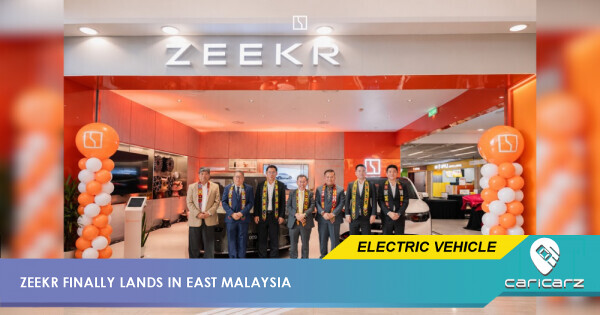
Kuching Gets Zeekr's First East Malaysia Store, With More Coming Next Year
Zeekr opens its first East Malaysia retail location at The Spring Kuching, with permanent sales and service centres targeted for Q1 2027.

29-09-2026
Buying A Hybrid Or EV? MAA Proposes Up To RM10,000 Tax Rebate
MAA proposes a RM7,000-RM10,000 income tax rebate for hybrid and EV buyers under Budget 2027, plus incentives for home charging and old-car scrapping.
28-09-2026
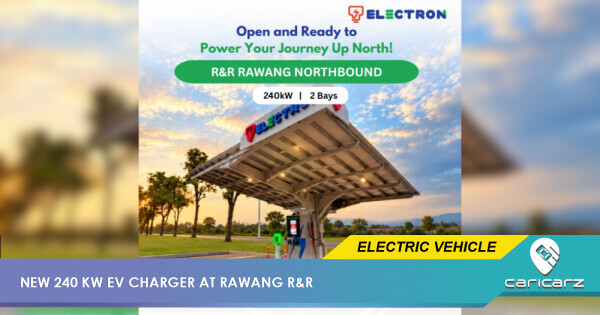
Driving Up North In An EV? There's A New 240 kW Charger At Rawang R&R
TNB Electron's new 240 kW DC EV charger at R&R Rawang Northbound is now live, with free charging available until 29 Sept 2026.
28-09-2026
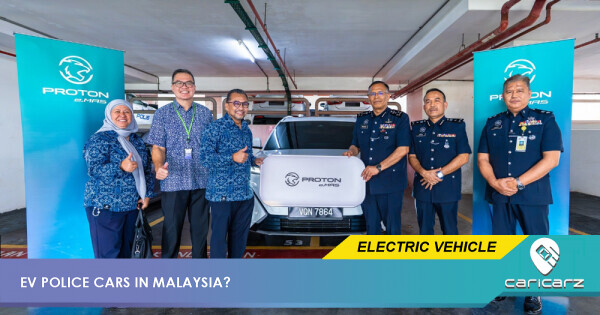
Could An EV Really Work As A Malaysian Police Car? PDRM Is Finding Out
PDRM is testing the Proton e.MAS 5, e.MAS 7 EV and e.MAS 7 PHEV to see whether electrified vehicles could work for Malaysian police duties.
18-09-2026
Malaysia's Electricity Protection Is Now 800 kWh - How Much Power Does An EV Use Per 100 KM?
Malaysia's electricity protection threshold is now 800 kWh. Here's how much electricity popular EVs use per 100 km and what the extra 200 kWh means.
18-09-2026
17 New Mercedes Models Are Coming To Malaysia In 2027 - Here's What We Know
Mercedes-Benz Malaysia plans 17 new models for 2027, with most set for local assembly in Pekan. Here's what we know about its ICE and EV plans.
17-09-2026
Perodua QV-E Now At RM53,499 Vs Proton e.MAS 5: Which Makes More Sense?
Perodua QV-E now starts at RM53,499 with BaaS under its Malaysia Day promo. See how it compares with the Proton e.MAS 5 on price, range, charging and features.
16-09-2026
Yes, Tan Chong Is Involved In Perodua's EV. Here's What It's Actually Doing
Tan Chong has signed a three-year agreement to support Perodua's EV production with ED coating, painting and assembly-line services.
15-09-2026
Show More
trending_flat