Beyond Lithium: Standards, Policy, and Scale Drive Sodium-ion Momentum

-full_normal.jpg)
Sodium-ion batteries (SIBs) are edging closer to mass adoption, with industry players expecting the next two to three years to decide their market role.
At the recent 2025 Sodium-Ion Battery Industry Chain and Standards Development Forum, experts said the technology has moved beyond prototypes and into early commercialisation, with 2026 likely to mark the start of large-scale applications.
Unlike lithium-ion, SIBs are carving a space through differentiation. They offer high power output, reliable performance in extreme cold, strong safety credentials, and lower costs. These advantages make them attractive for hybrids, uninterruptible power supplies, energy storage systems, and as a replacement for lead-acid batteries.
-full_normal.jpg)
Cost is a major driver. Current production is priced around 0.4–0.5 RMB/Wh (0.24–0.3 RM/Wh), and with scale, experts believe this could fall to 0.3 RMB/Wh (0.18 RM/Wh), comparable with lithium iron phosphate.
At the same time, performance is improving: today’s cells deliver 165 Wh/kg, 10,000 cycles at 2°C, and stable operation between –40°C and 45°C.
The biggest name in the game, CATL, has already launched the world’s first mass-produced sodium battery. With an energy density of 175 Wh/kg, it enables over 500 km of driving range and could meet as much as 40 per cent of passenger car demand in China. Applications also extend to heavy trucks, mining equipment, and hybrid machinery.
-full_normal.jpg)
On the technical side, researchers such as Tsinghua University’s Li Jinghong are pointing to vanadium sodium phosphate cathodes paired with hard carbon anodes as a promising route for high-power cells. This system offers stability and a high-voltage platform, key to scaling the technology into demanding uses.
Standards and regulation are also falling into place. China has issued two national standards for sodium-ion batteries, with 11 more underway, plus four international standards it is leading. Tests across 44 companies confirm strong low-temperature performance and safety, reinforcing their case as a lead-acid alternative.
-full_normal.jpg)
-full_normal.jpg)
Government support is another tailwind. Both the Ministry of Industry and Information Technology (MIIT) and the National Energy Administration (NEA) have identified sodium-ion as a strategic priority for new energy storage, guiding policies toward quality development.
Taken together, the momentum is clear. Though sodium-ion will not replace lithium-ion anytime soon, it is positioned to complement it, especially in sectors demanding high power, safety, and cold-weather reliability.
With clear applications, supportive policies, and production scaling up, the period leading into 2026 is seen as a make-or-break window for the technology to secure its commercial foothold.
Source: CarNewsChina
Written By
Kumeran Sagathevan
More then half his life spend being obsessed with all thing go-fast, performance and automotive only to find out he's actually Captain Slow behind the wheels...oh well!


JPJ Running Numbers
KUALA LUMPUR
VRS2271
SELANGOR
BSU1401
JOHOR
JF384J
PULAU PINANG
PSF9490
PERAK
APL8039
PAHANG
CFH8716
KEDAH
KGJ3035
NEGERI SEMBILAN
NEM1410
KOTA KINABALU
SJU3520
KUCHING
QAB6589P
Last updated 30 Sep, 2026
Fuel Price
Petrol
RON 95
RM 3.97
+1.38
RON 97
RM 4.90
+1.75
RON 100
RM 7.20
+2.20
VPR
RM 8.23
+2.00
Diesel
EURO 5 B10
RM 5.12
+2.08
EURO 5 B7
RM 5.32
+2.08
Last updated 30 Apr, 2026
Related News

Battery Manufacturer INV Breaks Ground For New Penang Plant
INV New Material Technology (M) Sdn Bhd, a battery manufacturer, is investing RM6.4 billion to open its first-ever manufacturing facility in Penang.

01-12-2023

CATL Begins European Production Of EV Batteries In Germany
The first batch of lithium-ion battery cells rolled off the newly installed production line in CATT's G2 building under series conditions
27-12-2022
Latest News
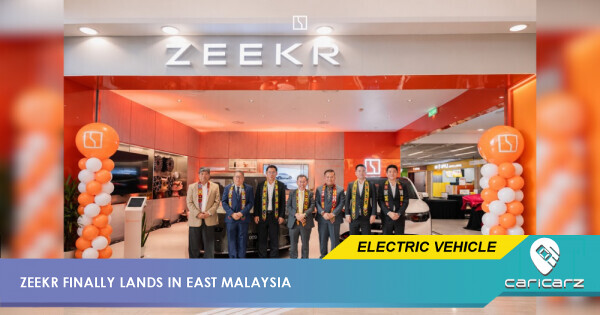
Kuching Gets Zeekr's First East Malaysia Store, With More Coming Next Year
Zeekr opens its first East Malaysia retail location at The Spring Kuching, with permanent sales and service centres targeted for Q1 2027.

29-09-2026
Buying A Hybrid Or EV? MAA Proposes Up To RM10,000 Tax Rebate
MAA proposes a RM7,000-RM10,000 income tax rebate for hybrid and EV buyers under Budget 2027, plus incentives for home charging and old-car scrapping.
28-09-2026
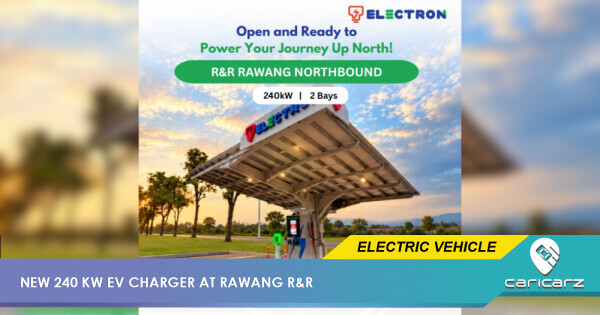
Driving Up North In An EV? There's A New 240 kW Charger At Rawang R&R
TNB Electron's new 240 kW DC EV charger at R&R Rawang Northbound is now live, with free charging available until 29 Sept 2026.
28-09-2026
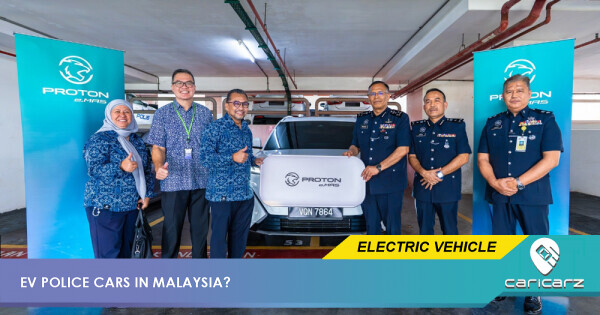
Could An EV Really Work As A Malaysian Police Car? PDRM Is Finding Out
PDRM is testing the Proton e.MAS 5, e.MAS 7 EV and e.MAS 7 PHEV to see whether electrified vehicles could work for Malaysian police duties.
18-09-2026
Malaysia's Electricity Protection Is Now 800 kWh - How Much Power Does An EV Use Per 100 KM?
Malaysia's electricity protection threshold is now 800 kWh. Here's how much electricity popular EVs use per 100 km and what the extra 200 kWh means.
18-09-2026
17 New Mercedes Models Are Coming To Malaysia In 2027 - Here's What We Know
Mercedes-Benz Malaysia plans 17 new models for 2027, with most set for local assembly in Pekan. Here's what we know about its ICE and EV plans.
17-09-2026
Perodua QV-E Now At RM53,499 Vs Proton e.MAS 5: Which Makes More Sense?
Perodua QV-E now starts at RM53,499 with BaaS under its Malaysia Day promo. See how it compares with the Proton e.MAS 5 on price, range, charging and features.
16-09-2026
Yes, Tan Chong Is Involved In Perodua's EV. Here's What It's Actually Doing
Tan Chong has signed a three-year agreement to support Perodua's EV production with ED coating, painting and assembly-line services.
15-09-2026
Show More
trending_flat