2026 BMW iX3 Sees Neue Klasse Level Up On Sustainability

-full_normal.jpg)
The Neue Klasse isn’t just a new design era for BMW. It’s a promise to rethink how cars are built, driven and eventually recycled.
That vision takes centre stage with the debut of the new 2026 BMW iX3 50 xDrive, the first model to carry the Neue Klasse philosophy into production. More than just an electric SUV, it blends performance with a deep commitment to sustainability, setting the tone for BMW’s future.
-full_normal.jpg)
BMW has long spoken about its 2030 and 2050 climate goals. With the iX3, those ambitions are no longer distant targets but visible results. Its entire life cycle has been scrutinised and verified by TUV Rheinland, from supply chain and production to daily use and end-of-life recycling.
-(1)-full_normal.jpg)
At launch, its footprint stands at 13.5 tons of CO₂e, higher than its petrol sibling because of the energy needed to produce its high-voltage battery. But that is only the starting point.
When driven over 200,000 KM, the iX3 generates less than half the emissions of a combustion X3, reaching break-even in as little as a year when charged with renewable electricity.
-full_normal.jpg)
What makes this car stand out is how sustainability is woven into its very fabric, literally speaking. Econeer seat fabrics are spun entirely from recycled PET bottles, designed as mono-materials so they can be easily recycled again.
Nearly a third of the materials used are secondary or recycled. The wheels are cast from 70% recycled aluminium. Engine covers and storage bins are made from maritime plastics reclaimed from old fishing nets, preventing waste from ending up in the ocean.
-full_normal.jpg)
Even the 6th-Gen high-voltage battery uses 50% secondary cobalt, lithium and nickel, while its production relies heavily on renewable energy.
This “Design for Circularity” approach means the iX3 has been engineered with a second life in mind. Its battery packs will not just be discarded when they can no longer power the car. Instead, they can serve as stationary energy storage, stabilising renewable grids before eventually being recycled into new cells.
-full_normal.jpg)
As BMW Malaysia’s Director of Communications and Head of Sustainability, Sashi Ambi, once pointed out, advanced recycling can potentially recover up to 90% of valuable minerals for reuse in new batteries.
Production itself is another breakthrough. The iX3 is built at BMW’s new Debrecen plant in Hungary, the company’s first factory designed to operate without fossil fuels. Powered entirely by electricity, with up to a quarter generated by on-site solar panels, the facility stores excess energy for use in processes like paint curing. This cuts production-related emissions by two-thirds compared to other BMW factories.
-full_normal.jpg)
-full_normal.jpg)
Out on the road, efficiency meets performance in typical BMW fashion. Aerodynamic tweaks, lower rolling resistance and refined power electronics mean the iX3 consumes 20% less energy than its predecessor.
And yet it still delivers the driving dynamics that we all love and that define the brand.
-full_normal.jpg)
Perhaps most impressive is BMW’s transparency. The company has made the iX3’s full Vehicle Footprint report public, accessible even through the My BMW app. Customers can see exactly how raw materials were sourced and how emissions stack up across the car’s entire life cycle. It is a rare step in an industry where sustainability claims are often vague and unverified.
-full_normal.jpg)
To put it in a nutshell, the iX3 50 xDrive shows what the Neue Klasse is really about, not just electrification but responsibility, circularity and innovation on every level proving that luxury, performance and climate responsibility no longer need to travel in different paths.
For Malaysia, the message is clear. The country has the chance to be more than just a market for EVs. By investing in advanced recycling and local supply chains, Malaysia could play an active role in the global shift.
In many ways, the iX3 is not just a symbol of BMW’s sustainability vision. It is also a glimpse of what Malaysia’s EV future could look like - provided that all automotive brands in the country set their sights on the same goal and work collectively towards it.
Gallery


Written By
Kumeran Sagathevan
More then half his life spend being obsessed with all thing go-fast, performance and automotive only to find out he's actually Captain Slow behind the wheels...oh well!


JPJ Running Numbers
KUALA LUMPUR
VRS2271
SELANGOR
BSU1401
JOHOR
JF384J
PULAU PINANG
PSF9490
PERAK
APL8039
PAHANG
CFH8716
KEDAH
KGJ3035
NEGERI SEMBILAN
NEM1410
KOTA KINABALU
SJU3520
KUCHING
QAB6589P
Last updated 30 Sep, 2026
Fuel Price
Petrol
RON 95
RM 3.97
+1.38
RON 97
RM 4.90
+1.75
RON 100
RM 7.20
+2.20
VPR
RM 8.23
+2.00
Diesel
EURO 5 B10
RM 5.12
+2.08
EURO 5 B7
RM 5.32
+2.08
Last updated 30 Apr, 2026
Related News

Second-Gen BMW iX3 Bows In as Brand’s First Neue Klasse Model
The second-gen BMW iX3 has made its global debut in Munich as the first production Neue Klasse EV.

06-09-2025
Latest News
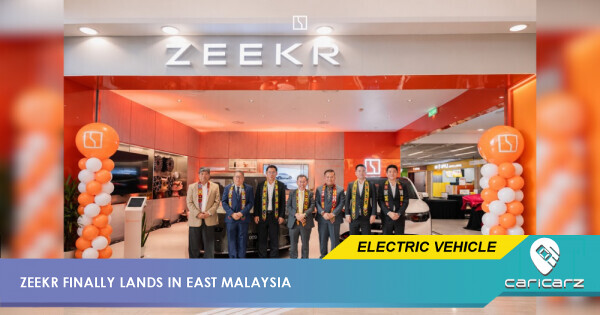
Kuching Gets Zeekr's First East Malaysia Store, With More Coming Next Year
Zeekr opens its first East Malaysia retail location at The Spring Kuching, with permanent sales and service centres targeted for Q1 2027.

29-09-2026
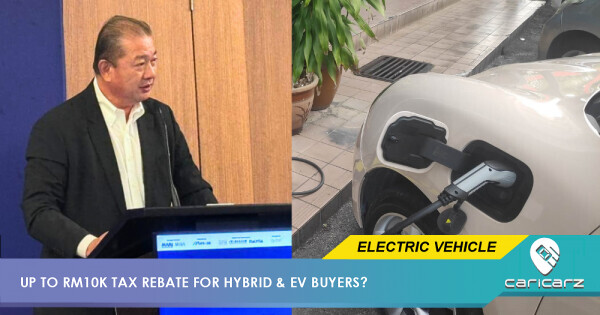
Buying A Hybrid Or EV? MAA Proposes Up To RM10,000 Tax Rebate
MAA proposes a RM7,000-RM10,000 income tax rebate for hybrid and EV buyers under Budget 2027, plus incentives for home charging and old-car scrapping.
28-09-2026
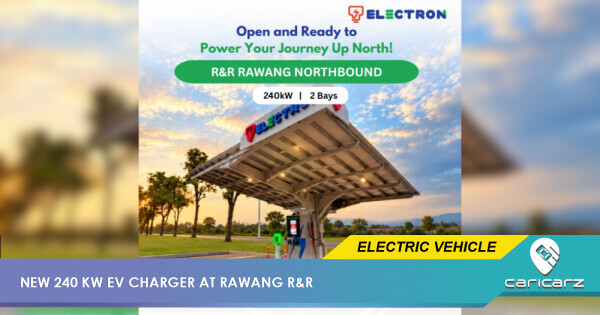
Driving Up North In An EV? There's A New 240 kW Charger At Rawang R&R
TNB Electron's new 240 kW DC EV charger at R&R Rawang Northbound is now live, with free charging available until 29 Sept 2026.
28-09-2026
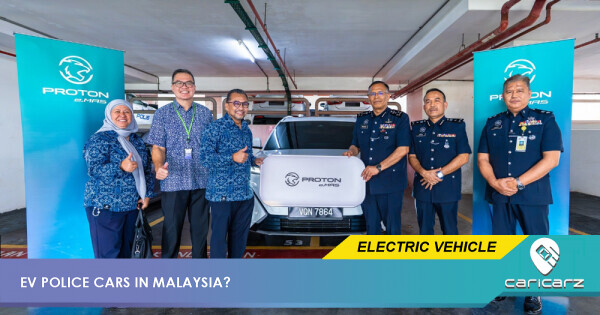
Could An EV Really Work As A Malaysian Police Car? PDRM Is Finding Out
PDRM is testing the Proton e.MAS 5, e.MAS 7 EV and e.MAS 7 PHEV to see whether electrified vehicles could work for Malaysian police duties.
18-09-2026
Malaysia's Electricity Protection Is Now 800 kWh - How Much Power Does An EV Use Per 100 KM?
Malaysia's electricity protection threshold is now 800 kWh. Here's how much electricity popular EVs use per 100 km and what the extra 200 kWh means.
18-09-2026
17 New Mercedes Models Are Coming To Malaysia In 2027 - Here's What We Know
Mercedes-Benz Malaysia plans 17 new models for 2027, with most set for local assembly in Pekan. Here's what we know about its ICE and EV plans.
17-09-2026
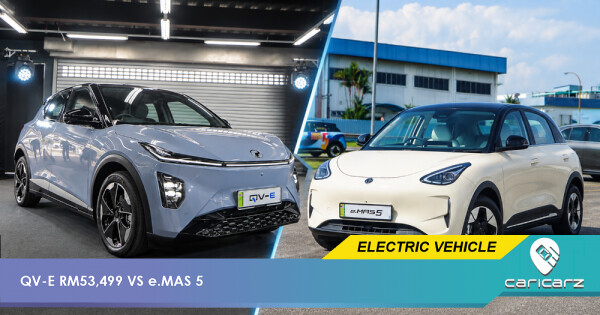
Perodua QV-E Now At RM53,499 Vs Proton e.MAS 5: Which Makes More Sense?
Perodua QV-E now starts at RM53,499 with BaaS under its Malaysia Day promo. See how it compares with the Proton e.MAS 5 on price, range, charging and features.
16-09-2026
Yes, Tan Chong Is Involved In Perodua's EV. Here's What It's Actually Doing
Tan Chong has signed a three-year agreement to support Perodua's EV production with ED coating, painting and assembly-line services.
15-09-2026
Show More
trending_flat