Thailand Cuts EV Taxes for Carmakers Using Local Parts


Thailand is moving to reshape its vehicle tax policy, with a strong new push rewarding vehicles built using local parts.
This means imported electric vehicles (EVs) with a higher proportion of Thai-made components could soon enjoy lower excise duties. Those that depend heavily on foreign parts may face steeper rates instead.
Thailand’s Deputy Finance Minister Paopoom Rojanasakul reportedly said the goal is to strengthen the domestic auto parts industry and encourage manufacturers to buy local.

Currently, fully imported vehicles are taxed at a higher rate. The new plan aims to reduce that burden for EVs with more local content, linking tax benefits to industrial development.
Paopoom said the Thai Finance Ministry will work closely with the Board of Investment (BoI), which is expected to introduce measures to boost local sourcing among carmakers.
Former Prime Minister Thaksin Shinawatra has also called for higher taxes on imported EVs that use few Thai parts. He noted that free trade agreements, particularly with China with zero-tariff, made it harder for local players to compete.

When Thailand signed the ASEAN-China FTA about 20 years ago, EVs were not widely used. Officials believed the term referred to small vehicles like golf carts and did not expect them to affect the market.
A Finance Ministry source said pickup trucks would likely be the first category to have excise taxes tied to local content, as Thailand is already a major production base for pickups.
The BoI views the auto industry as a key driver of the economy. Over 2,000 local suppliers employ about 900,000 people. Increasing local content supports not just growth but also livelihoods.
-full.jpg)
EV adoption in Thailand is rising fast. Registrations jumped from 84,500 in 2022 to 206,000 in 2024. In that time, 644 EV-related projects applied for incentives, with total investments exceeding TBH280 Billion (RM37 Billion).
Government subsidies have helped fuel demand, but they come with strict conditions. Under the latest EV3.5 scheme, companies must produce twice as many EVs locally as they import by 2026, and triple by 2027. If they fall short, the subsidy amount must be returned.
The message is clear. To succeed in Thailand’s EV market, manufacturers must commit to building locally. With the right incentives, Thailand aims to turn EVs from an import trend into a domestic success story.
Source: Bangkok Post
Written By
Kumeran Sagathevan
More then half his life spend being obsessed with all thing go-fast, performance and automotive only to find out he's actually Captain Slow behind the wheels...oh well!


JPJ Running Numbers
KUALA LUMPUR
VRS2271
SELANGOR
BSU1401
JOHOR
JF384J
PULAU PINANG
PSF9490
PERAK
APL8039
PAHANG
CFH8716
KEDAH
KGJ3035
NEGERI SEMBILAN
NEM1410
KOTA KINABALU
SJU3520
KUCHING
QAB6589P
Last updated 30 Sep, 2026
Fuel Price
Petrol
RON 95
RM 3.97
+1.38
RON 97
RM 4.90
+1.75
RON 100
RM 7.20
+2.20
VPR
RM 8.23
+2.00
Diesel
EURO 5 B10
RM 5.12
+2.08
EURO 5 B7
RM 5.32
+2.08
Last updated 30 Apr, 2026
Related News

Chinese EV Brands Seek Lower Production Targets in Thailand
Chinese EV brands calling for lower production volume requirements in Thailand as sales slump.
14-10-2024

Thai Government Sets 2026 Deadline For Local Assembly Of Essential EV Parts
Automakers who profit from the Thai government's EV promotions will have to invest in domestic production of EV components by 2026.

25-09-2024

Thailand EV Board Approves EV Incentive Program For Commercial Trucks, Buses
Thailand's EV Board approves tax incentives for the adoption of electric trucks and buses, as well as cash grants for battery cell manufacturers.
22-02-2024
Latest News
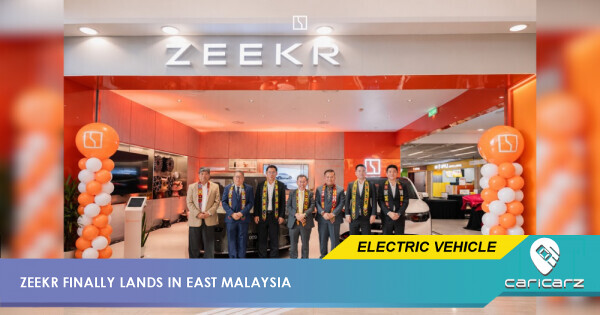
Kuching Gets Zeekr's First East Malaysia Store, With More Coming Next Year
Zeekr opens its first East Malaysia retail location at The Spring Kuching, with permanent sales and service centres targeted for Q1 2027.

29-09-2026
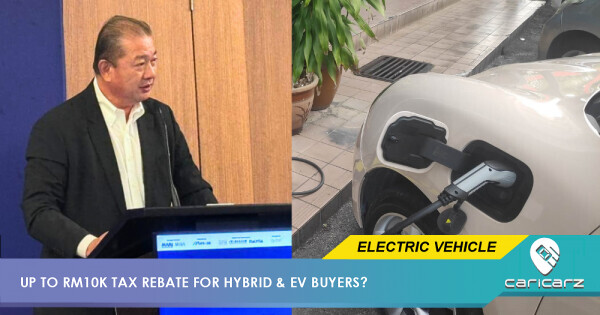
Buying A Hybrid Or EV? MAA Proposes Up To RM10,000 Tax Rebate
MAA proposes a RM7,000-RM10,000 income tax rebate for hybrid and EV buyers under Budget 2027, plus incentives for home charging and old-car scrapping.
28-09-2026
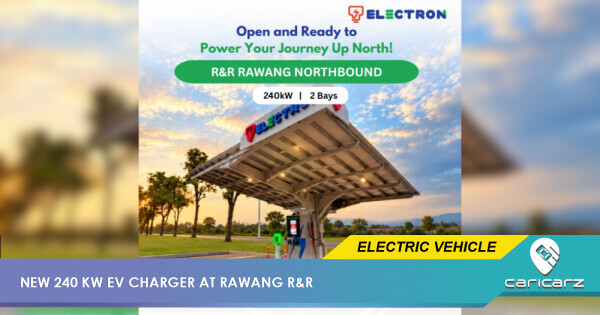
Driving Up North In An EV? There's A New 240 kW Charger At Rawang R&R
TNB Electron's new 240 kW DC EV charger at R&R Rawang Northbound is now live, with free charging available until 29 Sept 2026.
28-09-2026
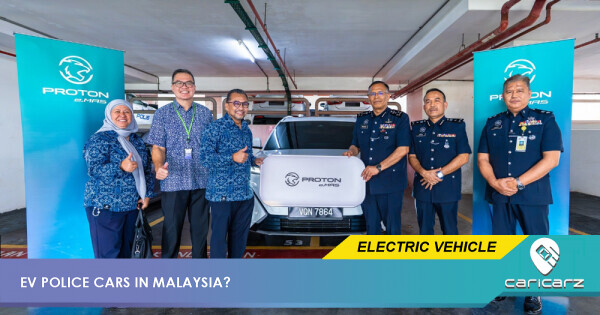
Could An EV Really Work As A Malaysian Police Car? PDRM Is Finding Out
PDRM is testing the Proton e.MAS 5, e.MAS 7 EV and e.MAS 7 PHEV to see whether electrified vehicles could work for Malaysian police duties.
18-09-2026
Malaysia's Electricity Protection Is Now 800 kWh - How Much Power Does An EV Use Per 100 KM?
Malaysia's electricity protection threshold is now 800 kWh. Here's how much electricity popular EVs use per 100 km and what the extra 200 kWh means.
18-09-2026

17 New Mercedes Models Are Coming To Malaysia In 2027 - Here's What We Know
Mercedes-Benz Malaysia plans 17 new models for 2027, with most set for local assembly in Pekan. Here's what we know about its ICE and EV plans.
17-09-2026
Perodua QV-E Now At RM53,499 Vs Proton e.MAS 5: Which Makes More Sense?
Perodua QV-E now starts at RM53,499 with BaaS under its Malaysia Day promo. See how it compares with the Proton e.MAS 5 on price, range, charging and features.
16-09-2026
Yes, Tan Chong Is Involved In Perodua's EV. Here's What It's Actually Doing
Tan Chong has signed a three-year agreement to support Perodua's EV production with ED coating, painting and assembly-line services.
15-09-2026
Show More
trending_flat