RM15 Million Hydrogen Station in Putrajaya: Visionary or Misplaced Bet?


Malaysia has taken a bold step toward a hydrogen-powered future with the launch of its first mobile hydrogen refuelling station (MHRS) in Peninsular Malaysia.
Located in Precinct 2, Putrajaya, the RM15 million pilot project is being positioned as a catalyst for hydrogen mobility and clean energy development. But it also raises pressing questions about priorities in the country’s green transition.
Launched by Science, Technology and Innovation Minister YB Chang Lih Kang, the MHRS can dispense up to 50KG of hydrogen daily. It aims to lay the groundwork for the future adoption of hydrogen fuel cell electric vehicles (FCEVs).

To paint a clearer picture, a Toyota Mirai, one of the very few hydrogen vehicles available in the market has a tank capacity of 5KG with a claimed WLTP range of 500KM. So the RM15 million investment would technically only be able to refuel 10 units of Toyota Mirai daily.
“At present, there are no hydrogen vehicles on Malaysian roads, but we already have suppliers for such vehicles,” Chang said during the launch. “We must begin by establishing the basic infrastructure so that FCEV adoption can take place. We hope to see FCEVs on the road by 2030.”

The project is led by NanoMalaysia Berhad (NMB) under the Ministry of Science, Technology and Innovation (MOSTI), with support from Petronas Technology Ventures Sdn Bhd (PTVSB), Sime UMW, UMW Toyota Motor Sdn Bhd (UMWT), and the Malaysian Green Technology and Climate Change Corporation (MGTC).
NMB will operate the station and use it as a testbed for hydrogen-related technologies. PTVSB is responsible for engineering, procurement, construction, and commissioning. UMW Toyota has provided three Toyota Mirai vehicles for demonstration, while MGTC is conducting a feasibility study on FCEV use in Malaysia using real-world data.

NMB CEO Dr. Rezal Khairi Ahmad described the MHRS as more than a technical pilot — calling it a launchpad for long-term innovation and investment aligned with Malaysia’s 2050 net-zero goals.
“Under MOSTI’s leadership, NMB aims to maximise the MHRS’s potential, working with local authorities and industry players to turn Putrajaya into the starting point for a nationwide hydrogen mobility transformation,” he said.
Still, the launch invites debate. Is this the right time — and the right place — for hydrogen mobility?


Spending RM15 million on a single station with no existing hydrogen vehicles may seem premature. Critics argue those funds could have been better used to expand Malaysia’s electric vehicle (EV) infrastructure, where consumer demand is already growing.
More public chargers, platform integration, and support for EV startups could have delivered broader, near-term benefits. Strengthening the EV ecosystem would also align more closely with current mobility trends.
Hydrogen’s strengths — fast refuelling and long range — generally suit commercial transport more than passenger cars. Its production and storage remain energy-intensive and costly, especially without scale.

Globally, hydrogen refuelling networks for light-duty vehicles have struggled. Companies like Shell and BP are withdrawing from the segment even in mature European markets, citing low demand and high operational costs.
Malaysia hopes to tap into a small-scale hydrogen refuelling market expected to surpass USD 7.3 billion by 2034. But for now, the infrastructure is arriving ahead of any real user base.

With public resources limited and EV adoption just beginning to accelerate, this raises a larger question: should hydrogen mobility be a national priority now — or should Malaysia first consolidate gains in the EV sector?
Time will tell whether the MHRS is a bold leap or a premature bet. For now, it has reignited debate on how best to power Malaysia’s low-carbon future.
Source: MalaysiaKini
Written By
Kumeran Sagathevan
More then half his life spend being obsessed with all thing go-fast, performance and automotive only to find out he's actually Captain Slow behind the wheels...oh well!


JPJ Running Numbers
KUALA LUMPUR
VRS2271
SELANGOR
BSU1401
JOHOR
JF384J
PULAU PINANG
PSF9490
PERAK
APL8039
PAHANG
CFH8716
KEDAH
KGJ3035
NEGERI SEMBILAN
NEM1410
KOTA KINABALU
SJU3520
KUCHING
QAB6589P
Last updated 30 Sep, 2026
Fuel Price
Petrol
RON 95
RM 3.97
+1.38
RON 97
RM 4.90
+1.75
RON 100
RM 7.20
+2.20
VPR
RM 8.23
+2.00
Diesel
EURO 5 B10
RM 5.12
+2.08
EURO 5 B7
RM 5.32
+2.08
Last updated 30 Apr, 2026
Related News

These Toyota Hydrogen Cartridges Could Replace Batteries in the Future
Toyota is currently working on a portable hydrogen cartridge that could replace removable batteries in the future.
10-10-2024

British Firm Launches Ready-to-Use Hydrogen FCEV Powertrain
Viritech has developed the first off-the-shelf hydrogen powertrain, which combines a 16kWh 400V battery with a 59mph fuel cell.

08-03-2024

BMW, Toyota Teams Up To Develop Fuel-Cell EVs
BMW and Toyota agree to co-develop hydrogen fuel-cell EVs, first model set for 2028 debut.
08-09-2024

Toyota Introduces New Blue Dot Emblem for Electrified Models
Future electrified Toyota models will come with a new blue dot emblem, replacing the old blue-haloed Toyota badge.
27-11-2023

Toyota Hilux FCEV Begins Development in UK, Prototype Ready by 2023
Long-time FCEV advocate Toyota begins to develop new Hilux FCEV in the UK, with driveable prototypes to be ready in 2023.
05-12-2022

Hydrogen-Powered Mirai Trials To Begin Next Year In Pen Malaysia
Three units of Toyota Mirai will undergo trials in peninsular Malaysia by the first quarter of 2025.
15-11-2024

MOSTI Is Spearheading Hydrogen FCEV Adoption In Malaysia
MOSTI set to spearhead Malaysia’s adoption of Hydrogen FCEV mobility, aims for it to be viable fossil fuel alternative by 2050.

01-04-2024

Sarawak Deputies Receive Hydrogen-Powered Toyota Mirai
Three units of Toyota Mirai will now belong to several Sarawak deputies through a handover ceremony in Kuching.

22-03-2023
Latest News
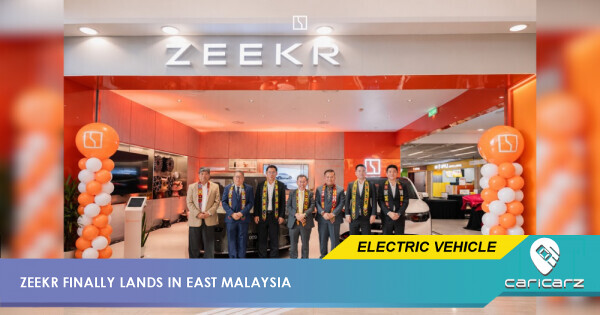
Kuching Gets Zeekr's First East Malaysia Store, With More Coming Next Year
Zeekr opens its first East Malaysia retail location at The Spring Kuching, with permanent sales and service centres targeted for Q1 2027.

29-09-2026
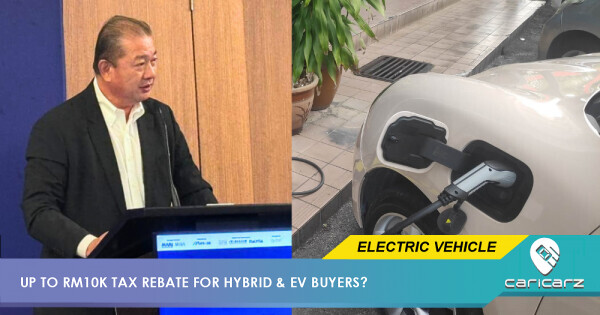
Buying A Hybrid Or EV? MAA Proposes Up To RM10,000 Tax Rebate
MAA proposes a RM7,000-RM10,000 income tax rebate for hybrid and EV buyers under Budget 2027, plus incentives for home charging and old-car scrapping.
28-09-2026
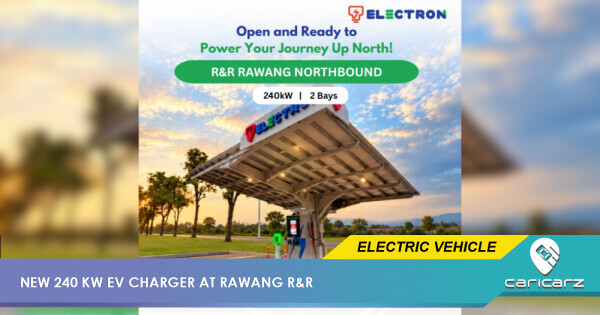
Driving Up North In An EV? There's A New 240 kW Charger At Rawang R&R
TNB Electron's new 240 kW DC EV charger at R&R Rawang Northbound is now live, with free charging available until 29 Sept 2026.
28-09-2026
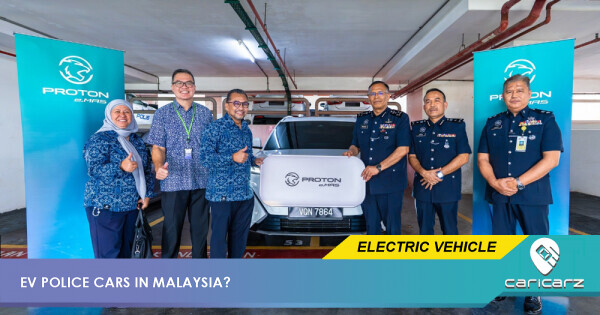
Could An EV Really Work As A Malaysian Police Car? PDRM Is Finding Out
PDRM is testing the Proton e.MAS 5, e.MAS 7 EV and e.MAS 7 PHEV to see whether electrified vehicles could work for Malaysian police duties.
18-09-2026
Malaysia's Electricity Protection Is Now 800 kWh - How Much Power Does An EV Use Per 100 KM?
Malaysia's electricity protection threshold is now 800 kWh. Here's how much electricity popular EVs use per 100 km and what the extra 200 kWh means.
18-09-2026
17 New Mercedes Models Are Coming To Malaysia In 2027 - Here's What We Know
Mercedes-Benz Malaysia plans 17 new models for 2027, with most set for local assembly in Pekan. Here's what we know about its ICE and EV plans.
17-09-2026
Perodua QV-E Now At RM53,499 Vs Proton e.MAS 5: Which Makes More Sense?
Perodua QV-E now starts at RM53,499 with BaaS under its Malaysia Day promo. See how it compares with the Proton e.MAS 5 on price, range, charging and features.
16-09-2026
Yes, Tan Chong Is Involved In Perodua's EV. Here's What It's Actually Doing
Tan Chong has signed a three-year agreement to support Perodua's EV production with ED coating, painting and assembly-line services.
15-09-2026
Show More
trending_flat