Thailand’s Bold Move on PHEV Tax Breaks - Malaysia?


There has been growing speculation about whether the Malaysian government is committed to supporting xEV, which includes not just EVs but also PHEVs and hybrids.
This discussion has intensified as the Completely Built-Up (CBU) EV tariff exemption is set to end this year, while the Completely Knocked Down (CKD) EV tariff exemption is scheduled to expire in 2027.
Despite the noise, three months into the year, there has been little indication of a concrete plan to expand incentives beyond fully electric vehicles.
In contrast, Thailand is aggressively pushing forward with its electrification strategy.
The Thai Finance Ministry is set to propose new support measures for plug-in hybrid electric vehicles (PHEVs) to the cabinet by April.
According to Deputy Finance Minister Paopoom Rojanasakul, these measures are expected to take effect on Jan 1, 2026.
The new PHEV support measures will introduce a separate tax structure for PHEVs and battery electric vehicles (EVs).

Instead of being based on carbon emissions, the tax rate for PHEVs will depend on how far the vehicle can travel on a full charge.
Vehicles with a longer electric range will be taxed at a lower rate, while those with a shorter range will face higher taxes.
Another key change is the removal of the current fuel tank capacity restriction. At present, PHEVs are limited to a maximum tank size of 45 litres, but this restriction will be lifted.
Further details, including the specific tax rates, will be announced once the cabinet approves the measures.
Under the existing structure, PHEVs that can travel more than 80 kilometres per electric power alone are taxed at 5%, while those with a shorter range are taxed at 10%.
Mr. Paopoom emphasized that supporting PHEVs is essential for sustaining Thailand’s automobile manufacturing industry.
The industry has long been based on internal combustion engine vehicles, and PHEVs serve as an important transitional step before the full shift to battery EVs.

The Excise Department is also revising the tax structure for batteries. Currently, all batteries are taxed at a flat rate of 8%, but a new tiered system will be introduced.
Batteries with longer life cycles per charge will face lower taxes, while disposable batteries will be taxed at a higher rate.
The new structure will also consider the battery’s energy capacity relative to its weight, with more efficient batteries benefiting from lower tax rates.
Additionally, in order to promote CKD production, from next year, EV importers benefiting from government incentives will be required to manufacture EVs domestically in Thailand.

This policy aims to balance imports with local production and is expected to result in around 100,000 domestically produced EVs in 2025.
Now while Malaysia debates its xEV strategy, Thailand has already taken decisive steps to expand its tax incentives for electrified vehicles.
Notably, Thailand’s plan does not extend PHEV incentives indefinitely, signaling a clear preference for fully electric vehicles in the long run.
As discussions continue in Malaysia, Thailand's proactive approach stands in stark contrast, highlighting the difference in policy direction between the two neighboring nations.
Maybe its high time Malaysia take a page off Thailand’s xEV playbook as we personally find this new proposed PHEV tax structure detailed above simply brilliant and implementing something similar could fuel Malaysia’s overall EV transition plan.
Source: BangkokPost
Written By
Kumeran Sagathevan
More then half his life spend being obsessed with all thing go-fast, performance and automotive only to find out he's actually Captain Slow behind the wheels...oh well!


JPJ Running Numbers
KUALA LUMPUR
VSA4819
SELANGOR
BSV2920
JOHOR
JH7613J
PULAU PINANG
PSH5424
PERAK
APN2134
PAHANG
CFJ4636
KEDAH
KGJ9130
NEGERI SEMBILAN
NEM6571
KOTA KINABALU
SJV2938
KUCHING
QAB704Q
Last updated 23 Nov, 2026
Fuel Price
Petrol
RON 95
RM 3.97
+1.38
RON 97
RM 4.90
+1.75
RON 100
RM 7.20
+2.20
VPR
RM 8.23
+2.00
Diesel
EURO 5 B10
RM 5.12
+2.08
EURO 5 B7
RM 5.32
+2.08
Last updated 30 Apr, 2026
Related News

Govt Exploring Fresh Measures to Support EV Growth Post 2025
Govt is exploring new incentives to keep its EV transition on track as current tax exemptions expire end-2025.
17-10-2025
Latest News
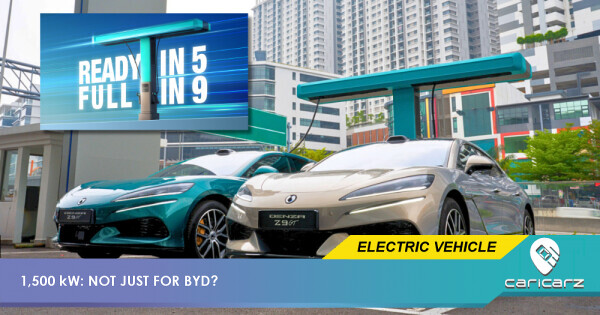
BYD Flash Charging Malaysia: 9-Minute Charging, Locations And Compatible EVs
BYD Flash Charging is now in Malaysia. Explore its 1,500 kW chargers, nine-minute charging, locations, compatible EVs and nationwide expansion plans.

20-11-2026
Malaysia Commercial EV Tax Incentives: What's Available And What's Being Proposed
Malaysia is studying sales tax exemptions for electric lorries. Explore existing GITA incentives, Budget 2027 measures and their link to diesel subsidies.
19-11-2026
Malaysia's Temporary 800 kWh Electricity Bill Protection Ends December 2026: What EV Owners Should Know
Malaysia's temporary 800 kWh electricity bill protection ends Dec 31, 2026. Here's what EV owners should know about home charging and electricity tariffs.
19-11-2026
Malaysia's Proposed EV Levy Explained: Charging Infrastructure, Funding And EV Affordability
Malaysia is studying an EV levy to fund more public chargers. Explore the proposal, infrastructure challenges, Budget 2027 incentives and EV affordability.
18-11-2026
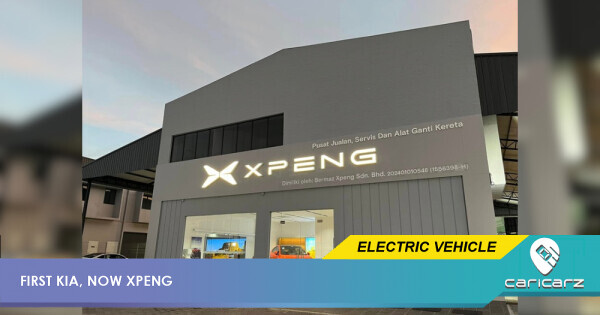
Bermaz Auto Ends XPENG Distributorship: What It Means For Malaysia's Automotive Industry
Bermaz Auto ends its XPENG distributorship in Malaysia. Explore its financial significance and the evolving role of local automotive distributors.
18-11-2026
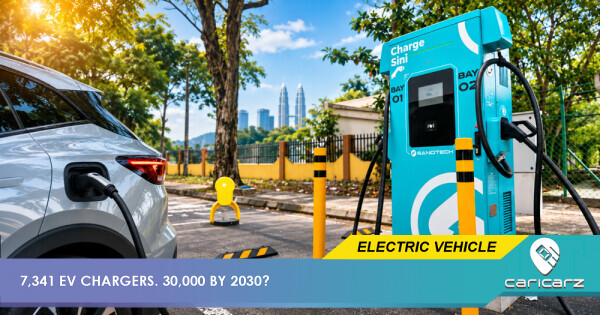
Malaysia's 30,000 EV Charger Target: 7,341 Installed As Of September 2026
Malaysia has 7,341 EV chargers but needs 22,659 more by 2030. Can faster expansion and better rural coverage close the gap?
17-11-2026
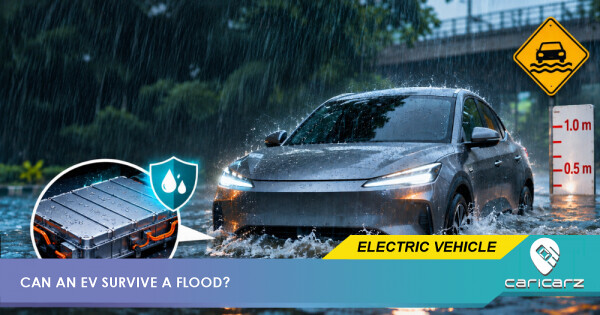
EV Flood Damage: Are Electric Car Batteries Waterproof?
Can an EV survive a flood? Learn how floodwater affects electric car batteries, what damage can occur and what Malaysian EV owners should do.
10-11-2026
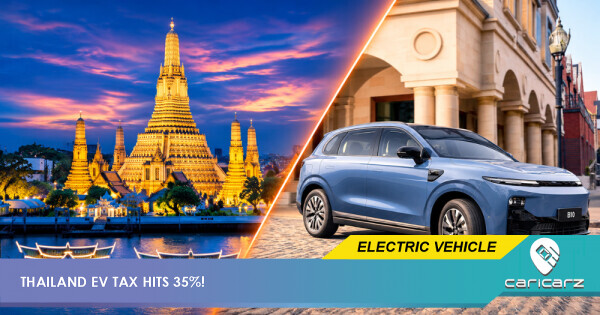
Thailand EV Import Tax Rises To 35% In 2027 — Malaysia Policy Compared
Thailand raises its EV import tax to 35% in 2027. See how Malaysia's RM200,000 CIF and 180 kW CBU EV rules compare, and what buyers should know.
04-11-2026
Show More
trending_flat
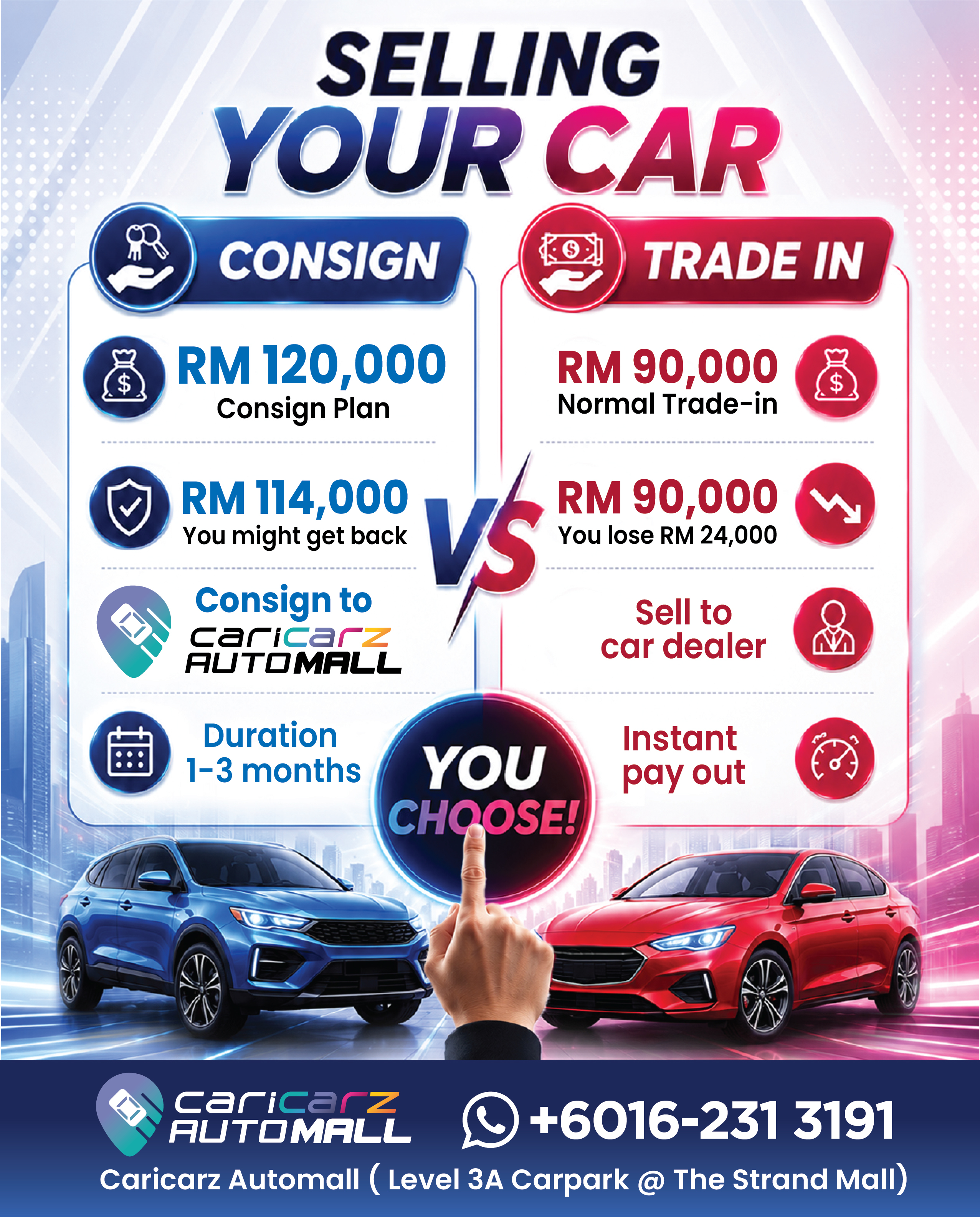
Malaysia First Used Car and EV Consignment Platform
This is the best place to sell your car at true market value. Instead of accepting low dealer trade-ins, we handle everything and connect your car directly to genuine buyers for the highest price.

Understanding CariCarzAutomall Consignment Plan

Approved 200-Check Points Inspection

7 Day Money Back Guarantee

One Year Extended Warranty

No Hidden Charge
