Tesla vs. BYD: Truth About Their Batteries


Electric vehicles (EV) are taking over the roads, but what really powers them? At the heart of it all are the batteries, and two companies - Tesla and BYD - leads the charge with their own unique approaches.
In a recent report published by Cell Report Physical Science, a group of engineers took apart Tesla’s 4680 cylindrical cell and BYD’s Blade prismatic cell to see what makes them tick. Their teardown gives us a rare look inside these cutting-edge power sources and reveals how different design choices shape performance, cost, and efficiency.

Tesla’s 4680 battery is built for high energy density and cost reduction. It uses a cylindrical shape and a tabless design, which helps improve energy flow and reduce resistance. On the other hand, BYD’s Blade battery takes a different route. It’s a prismatic lithium iron phosphate (LFP) cell designed for safety, longevity, and affordability.
These two batteries represent two different philosophies - Tesla prioritizes performance and efficiency, while BYD focuses on making batteries that are safer and cheaper to produce.

When the battery housing is cracked open, the difference becomes clearer. Tesla’s 4680 cell uses a jelly-roll configuration and relies on laser welding for its electrode connections. BYD’s Blade cell, meanwhile, has a long, flat structure with stacked electrodes and combines laser and ultrasonic welding for durability.
Performance-wise, Tesla’s 4680 cell is a powerhouse, packing an energy density of 241 Wh/kg and 643.3 Wh/L. That’s great for range and performance, but it comes with a downside - it generates three times more heat per volume than BYD’s Blade cell. That means Tesla’s design requires a more advanced cooling system to keep things running smoothly.
-full_normal.jpg)
BYD’s Blade battery, while less energy-dense at 160 Wh/kg and 355 Wh/L, has a major advantage in safety and lifespan. Its LFP chemistry makes it more stable, meaning a lower risk of overheating or catching fire.
Materials also play a huge role in these differences. Tesla’s battery uses a high-energy nickel-manganese-cobalt (NMC811) cathode, while BYD sticks with LFP, which is more affordable and reliable.

Both use graphite anodes, but Tesla’s includes additional binders like polyacrylic acid (PAA) and polyethylene oxide (PEO), which could impact long-term durability while BYD uses carboxymethyl cellulose (CMC) and styrene butadiene rubber (SBR) binders.
Cost is another big factor. Right now, BYD’s Blade battery is about €10/kWh (RM48/kWh) cheaper to produce than Tesla’s. That’s a major reason why LFP batteries are becoming more popular in lower-cost EVs.

This teardown makes one thing clear—Tesla and BYD have taken very different approaches to battery technology. Tesla’s 4680 cell is all about pushing the limits of energy storage and performance, but it needs a sophisticated cooling system to keep up. BYD’s Blade battery, while not as powerful, offers a safer, more affordable, and longer-lasting alternative.
As EVs continue to evolve, these insights will help shape the next generation of batteries. The future of electric mobility isn’t just about power - it’s about finding the right balance between cost, efficiency, and safety.
Gallery


Written By
Kumeran Sagathevan
More then half his life spend being obsessed with all thing go-fast, performance and automotive only to find out he's actually Captain Slow behind the wheels...oh well!


JPJ Running Numbers
KUALA LUMPUR
VRS2271
SELANGOR
BSU1401
JOHOR
JF384J
PULAU PINANG
PSF9490
PERAK
APL8039
PAHANG
CFH8716
KEDAH
KGJ3035
NEGERI SEMBILAN
NEM1410
KOTA KINABALU
SJU3520
KUCHING
QAB6589P
Last updated 30 Sep, 2026
Fuel Price
Petrol
RON 95
RM 3.97
+1.38
RON 97
RM 4.90
+1.75
RON 100
RM 7.20
+2.20
VPR
RM 8.23
+2.00
Diesel
EURO 5 B10
RM 5.12
+2.08
EURO 5 B7
RM 5.32
+2.08
Last updated 30 Apr, 2026
Related News

2024 Battery Trends in China: The Shift Toward LFP
China's 2024 battery market sees major shift towards LFP technology, driven by lower costs and improved safety.
20-01-2025

CATL & BYD Expects EV Battery Prices To Come Down By 50%
CATL and BYD expect battery prices to come down by close to 50%, which would result in cheaper EVs in years to come.
04-03-2024

BYD Doubles Down on LFP, Puts Safety Over Specs
BYD says LFP remains central to its EV strategy, taking aim at rivals chasing “range bragging rights” with NMC.
10-11-2025
Latest News
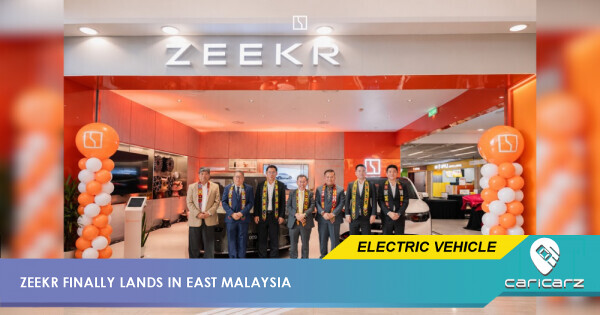
Kuching Gets Zeekr's First East Malaysia Store, With More Coming Next Year
Zeekr opens its first East Malaysia retail location at The Spring Kuching, with permanent sales and service centres targeted for Q1 2027.

29-09-2026
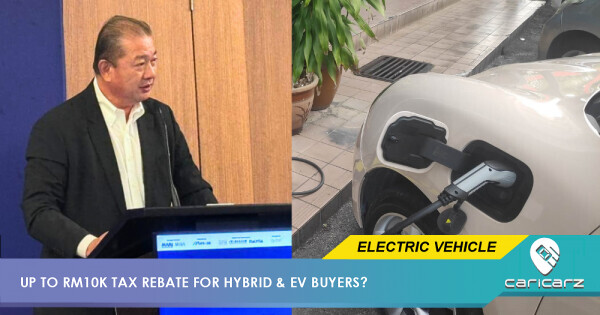
Buying A Hybrid Or EV? MAA Proposes Up To RM10,000 Tax Rebate
MAA proposes a RM7,000-RM10,000 income tax rebate for hybrid and EV buyers under Budget 2027, plus incentives for home charging and old-car scrapping.
28-09-2026
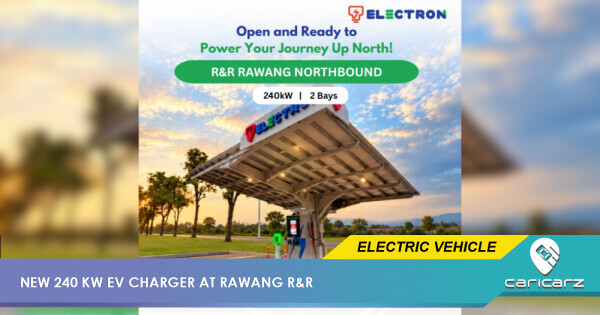
Driving Up North In An EV? There's A New 240 kW Charger At Rawang R&R
TNB Electron's new 240 kW DC EV charger at R&R Rawang Northbound is now live, with free charging available until 29 Sept 2026.
28-09-2026
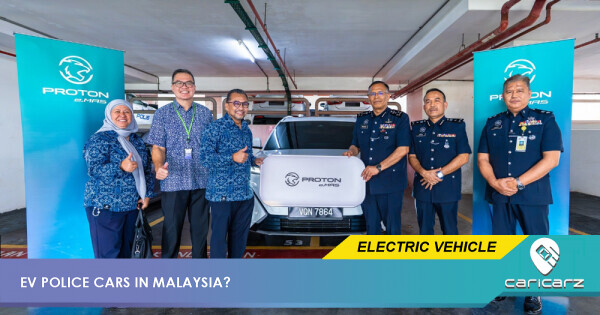
Could An EV Really Work As A Malaysian Police Car? PDRM Is Finding Out
PDRM is testing the Proton e.MAS 5, e.MAS 7 EV and e.MAS 7 PHEV to see whether electrified vehicles could work for Malaysian police duties.
18-09-2026
Malaysia's Electricity Protection Is Now 800 kWh - How Much Power Does An EV Use Per 100 KM?
Malaysia's electricity protection threshold is now 800 kWh. Here's how much electricity popular EVs use per 100 km and what the extra 200 kWh means.
18-09-2026
17 New Mercedes Models Are Coming To Malaysia In 2027 - Here's What We Know
Mercedes-Benz Malaysia plans 17 new models for 2027, with most set for local assembly in Pekan. Here's what we know about its ICE and EV plans.
17-09-2026
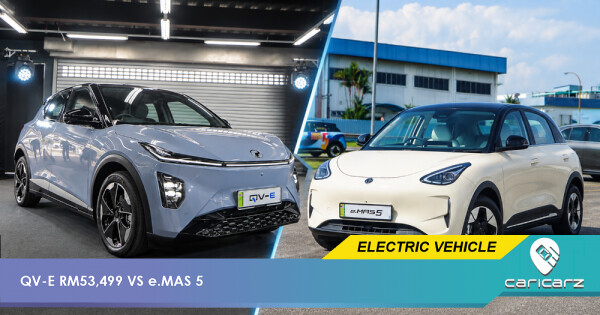
Perodua QV-E Now At RM53,499 Vs Proton e.MAS 5: Which Makes More Sense?
Perodua QV-E now starts at RM53,499 with BaaS under its Malaysia Day promo. See how it compares with the Proton e.MAS 5 on price, range, charging and features.
16-09-2026
Yes, Tan Chong Is Involved In Perodua's EV. Here's What It's Actually Doing
Tan Chong has signed a three-year agreement to support Perodua's EV production with ED coating, painting and assembly-line services.
15-09-2026
Show More
trending_flat