New Ariel E-Nomad Concept Is A Wild Lightweight EV Rally Raid Machine!


Debuting this week is the wild Ariel E-Nomad Concept lightweight all-road EV sportscar.
Renowned Somerset, UK-rooted low-volume lightweight sportscar makers Ariel debuted its very latest creation this week called the E-Nomad Concept. Aptly, this is an all-electric redux of the firm’s famed Nomad lightweight off-road sportscar.
The ‘Concept’ bit in its naming means that this is still a mere prototype, but it is set to pave the way for light, all-roads EVs using advanced tech. Set to debut publicly on Sept 4, Ariel adds that it plans to start producing and marketing it from 2026 onwards.

The E-Nomad Concept is based on Ariel's existing Nomad 2 all-terrain lightweight sportscar, borrowing the latter's underpinnings and layout.
The E-Nomad Concept was borne out of a tri-partite project called ZELV (Zero-Emissions Lightweight Vehicle). Partners include UK-based firms Rockfort Engineering and BAMD Composites. The project was even boosted by a GBP300,000 Advanced Propulsion Centre grant awarded by the UK government.
Underneath, the E-Nomad Concept underpins the same steel spaceframe chassis and all-independent suspension setup from the combustion (ICE)-powered Nomad, along with its rear-wheel-drive layout.

The novel battery is mounted behind the driver and passenger bulkhead, and it juices a rear e-motor outputting 281 HP and 489 NM.
Powering the E-Nomad Concept is a BorgWarner-sourced water-cooled single-drive e-motor that weighs just 92 KG and outputs 281 HP and 489 NM. It is juiced by 12 Pegasus V3 modules that form an advanced lithium-ion battery pack mounted behind the driver and passenger bulkhead.
No charging rates were revealed but Ariel says the battery can be fast-charged from 20-80% in just 25 minutes.

In terms of range and charging, Ariel says the battery can be fast-charged from 10-80% in 25 minutes, whilst a full charge ought to grant up to 150 miles (241 KM) of travel.
Developed by Rockfort, it also boasts a tunable control software and, besides claims of said battery pack setting new standards for energy density, the whole assembly weighs less than 300 KG. Altogether, the E-Nomad Concept weighs just 896 KG too.
Adding to the lightness to are the lightweight exterior panels constructed out of bio-composite nature fibres that are said to offer a 73% reduction in CO2 through its manufacturing versus carbon fibre. Even the tooling is more sustainable with Ariel touting a 50% CO2 reduction versus conventional moulding methods.


Weight is kept low thanks to the bio-composite nature fibres used to make the exterior panels (left) and the spaceframe chassis construction (right).

Ariel touts the E-Nomad Concept in being able to sprint from 0-96 KM/H in just 3.5 seconds and hit a V-max of 185 KM/H.
Said lightweight figures matched with the peppy outputs noted explains the E-Nomad Concept’s claimed ability to despatch 0-60 MPH (96 KM/H) sprints in just 3.5 seconds and hit a claimed V-max of 185 KM/H plus a rather modest claimed range of 150 miles (241 KM).
Additionally, the adoption of an e-motor sees the E-Nomad Concept get primed with both regenerative braking and anti-lock brakes (ABS) – the latter marking a first for any Ariel creation. The firm also added selectable drive modes, a limited-slip diff, as well as a parking lock.

Untypical of Ariel, the E-Nomad offers ABS, regenerative braking, selectable drive modes, and a parking lock.
With the E-Nomad Concept, brand CEO Simon Saunders also expressed his firm belief that low-volume carmakers such as Ariel itself “must embrace the electric future or risk being left behind.”
“Once it has been through our usual, gruelling testing regime we could opt to add E-Nomad alongside its ICE Nomad 2 sibling,” Saunders added.

Gallery


Written By
Thoriq Azmi
Former DJ turned driver, rider and story-teller. I drive, I ride, and I string words together about it all. [#FuelledByThoriq] IG: https://www.instagram.com/fuelledbythoriq/


JPJ Running Numbers
KUALA LUMPUR
VSA4819
SELANGOR
BSV2920
JOHOR
JH7613J
PULAU PINANG
PSH5424
PERAK
APN2134
PAHANG
CFJ4636
KEDAH
KGJ9130
NEGERI SEMBILAN
NEM6571
KOTA KINABALU
SJV2938
KUCHING
QAB704Q
Last updated 23 Nov, 2026
Fuel Price
Petrol
RON 95
RM 3.97
+1.38
RON 97
RM 4.90
+1.75
RON 100
RM 7.20
+2.20
VPR
RM 8.23
+2.00
Diesel
EURO 5 B10
RM 5.12
+2.08
EURO 5 B7
RM 5.32
+2.08
Last updated 30 Apr, 2026
Latest News
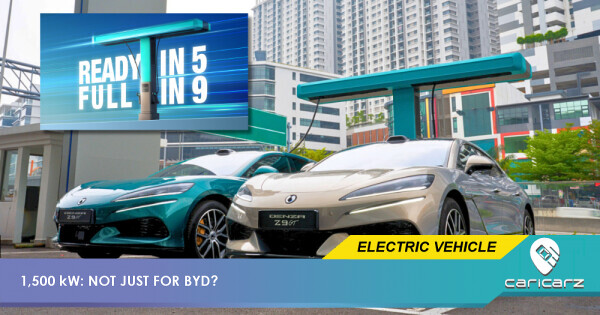
BYD Flash Charging Malaysia: 9-Minute Charging, Locations And Compatible EVs
BYD Flash Charging is now in Malaysia. Explore its 1,500 kW chargers, nine-minute charging, locations, compatible EVs and nationwide expansion plans.

20-11-2026
Malaysia Commercial EV Tax Incentives: What's Available And What's Being Proposed
Malaysia is studying sales tax exemptions for electric lorries. Explore existing GITA incentives, Budget 2027 measures and their link to diesel subsidies.
19-11-2026
Malaysia's Temporary 800 kWh Electricity Bill Protection Ends December 2026: What EV Owners Should Know
Malaysia's temporary 800 kWh electricity bill protection ends Dec 31, 2026. Here's what EV owners should know about home charging and electricity tariffs.
19-11-2026
Malaysia's Proposed EV Levy Explained: Charging Infrastructure, Funding And EV Affordability
Malaysia is studying an EV levy to fund more public chargers. Explore the proposal, infrastructure challenges, Budget 2027 incentives and EV affordability.
18-11-2026
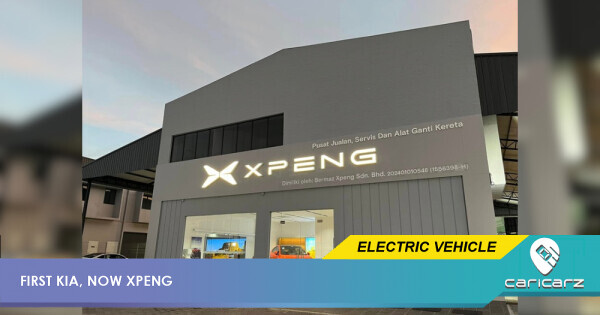
Bermaz Auto Ends XPENG Distributorship: What It Means For Malaysia's Automotive Industry
Bermaz Auto ends its XPENG distributorship in Malaysia. Explore its financial significance and the evolving role of local automotive distributors.
18-11-2026
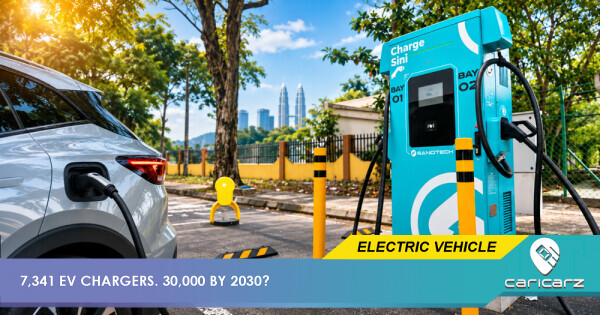
Malaysia's 30,000 EV Charger Target: 7,341 Installed As Of September 2026
Malaysia has 7,341 EV chargers but needs 22,659 more by 2030. Can faster expansion and better rural coverage close the gap?
17-11-2026
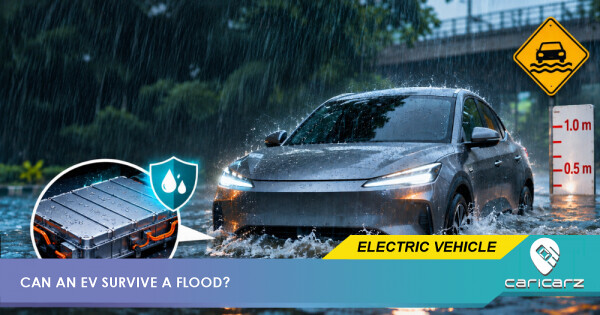
EV Flood Damage: Are Electric Car Batteries Waterproof?
Can an EV survive a flood? Learn how floodwater affects electric car batteries, what damage can occur and what Malaysian EV owners should do.
10-11-2026
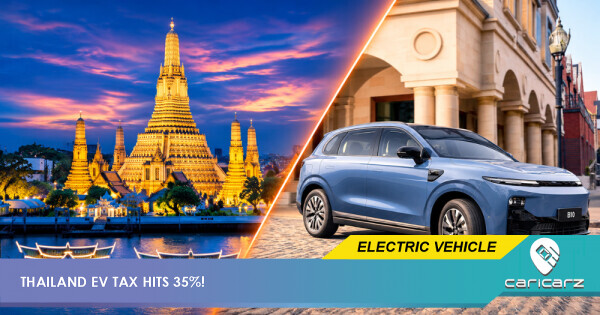
Thailand EV Import Tax Rises To 35% In 2027 — Malaysia Policy Compared
Thailand raises its EV import tax to 35% in 2027. See how Malaysia's RM200,000 CIF and 180 kW CBU EV rules compare, and what buyers should know.
04-11-2026
Show More
trending_flat
Malaysia First Used Car and EV Consignment Platform
This is the best place to sell your car at true market value. Instead of accepting low dealer trade-ins, we handle everything and connect your car directly to genuine buyers for the highest price.

Understanding CariCarzAutomall Consignment Plan


Approved 200-Check Points Inspection

7 Day Money Back Guarantee

One Year Extended Warranty

No Hidden Charge
