Citroen’s Sustainably And Adaptably Tailored Vehicle, The E-Jumpy Hydrogen


The E-Jumpy Hydrogen, an ingenuity realised by Citroen and SUEZ, meets all expectations after a month of intensive use by operators of SUEZ Carcassonne.
Remarks received on this first fuel cell utility van were very positive and highlights how closely the features offered match with the usages required by their activities.

Stellantis’ vice president for light commercial vehicles strategy and international development, Richard Meyer, said, “Citroen E-Jumpy Hydrogen marks a new step forward in the brand’s electrification strategy. It completes our range of zero-emission light commercial vehicles, the largest on the market. This new solution combines both Lithium-ion Battery and Fuel Cell technologies, in order to respond to intense use by professionals thanks to a hydrogen charging time of just three minutes and a driving range of 400 km. This technology will play an essential part in the roll-out of zero-emission mobility solutions for professionals.”
First of all, at the Carcassonne site, the site foremen are the ones who would put the E-Jumpy Hydrogen to good use for their daily activities.

Their role is multifaceted, involving worksite visits, restocking of small and large equipment supplies, and emergency repair work in the event of a water leak.
Plus, their journeys within the city and its outskirts are fairly short, about 100 km but frequent, as such their vehicles must be available quickly.

Therefore, to have a vehicle at their disposal 24/7 with sufficient driving range to avoid refuelling every now and then, is a necessity.
Hydrogen technology is thus presented as a complementary to the standard that electric vehicles offer in order to accommodate all these needs.

Certainly, thanks to its rapid refuelling trait, the E-Jumpy Hydrogen meets the wide-ranging usage requirements in terms of available driving range of 400 km and optimal operating time.
Filling up at the site’s 350-bar station takes just three minutes for half a tank and three minutes for a full tank at a 700-bar station.

Also, providing a 50 km reserve if the hydrogen tanks run out, is its 10.5 kWh battery that is very easy to charge on a standard 220-V socket, at night, three to five times a week.
On top of that, the vehicle also offers a high level of physical comfort while being hassle-free thanks to the hybrid electric-hydrogen technology.

Users can carry out all their activities with peace of mind, without any stress over driving range or ability to load equipment.
Significantly, the hydrogen technology offers a new solution in the field of professional mobility, complementary to the development of purely electric versions.

Where it is robust enough when it comes to carrying heavy loads, driving speed and weather conditions, such as negative temperatures reducing range.
Its exothermic system even generates heat, in turn improving thermal comfort that results with a driving range that is less sensitive to variations.

Furthermore, the vehicles used at the site are generally loaded to more than half their volume and the load often exceeds 200 kg, so, its loading capacities have been preserved.
Specifically, the useful volume of the E-Jumpy Hydrogen is the same as the thermal vehicle’s one, which is 5,300-litres for the medium body style and 6,100-litres for the extra-large.

Both versions offer a payload and towable load of up to 1 tonne, and its useful width between the wheel-arches of 1,250 mm is sufficient to load Euro palettes.
In terms of the mechanics, this hydrogen technology combines a lithium-ion battery with a fuel cell connected to hydrogen tanks.

Interestingly, when hydrogen and air are brought into contact with a catalyst, the fuel cell generates electricity to power an electric motor, the only residue released being water vapour.
Compared to a battery, a fuel cell is considered more as an energy converter than a storage device. As for it to be relative, this innovation by Citroen proves to be quite clever.

Particularly because, Hydrogen provides the energy needed for greater range, while the mid-capacity battery combines power and performance with energy recovery and recharging capability.
This solution offers various advantages. Firstly compactness, since the battery under the seats and the tanks under the floor have no impact on the loading volume.

Second, it ensures there is no compromise in terms of performance, with a fuel cell powerful enough to guarantee constant speed on the motorway.
Third, the battery then provides the energy required for acceleration and other features such as the extra power required when starting and for the first few kilometres.

Fourth, it also increases the durability of the propulsion system and limits the risk of ‘running dry’, since the battery provides reserve power when the hydrogen tanks are empty.
This hybrid solution was chosen by Citroen following research conducted in partnership with Symbio, a joint venture specialised in fuel cells and created by Michelin and Faurecia.

All in all, the versatility of the various hydrogen systems allows for a multitude of applications, and the E-Jumpy Hydrogen is the prime example of what it can do.
That said, this technology of the future will therefore play an essential role in the energy transition, particularly in the field of mobility, by responding to a certain type of practice.

Gallery


Written By
Afiq Saha
Part of the CariCarz multi-faceted editorial team, Afiq is an English author packing four years of professional writing experience, be it creative or factual. (LinkedIn: www.linkedin.com/in/Afiq-Saha-AS27)


JPJ Running Numbers
KUALA LUMPUR
VRS2271
SELANGOR
BSU1401
JOHOR
JF384J
PULAU PINANG
PSF9490
PERAK
APL8039
PAHANG
CFH8716
KEDAH
KGJ3035
NEGERI SEMBILAN
NEM1410
KOTA KINABALU
SJU3520
KUCHING
QAB6589P
Last updated 30 Sep, 2026
Fuel Price
Petrol
RON 95
RM 3.97
+1.38
RON 97
RM 4.90
+1.75
RON 100
RM 7.20
+2.20
VPR
RM 8.23
+2.00
Diesel
EURO 5 B10
RM 5.12
+2.08
EURO 5 B7
RM 5.32
+2.08
Last updated 30 Apr, 2026
Latest News
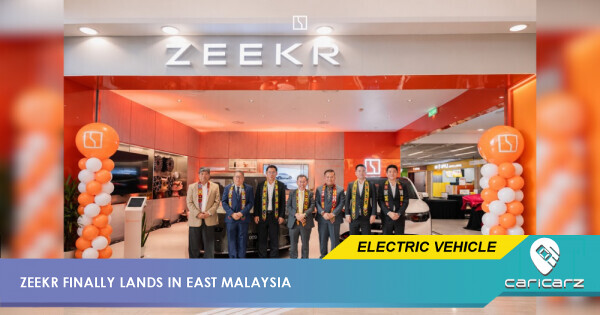
Kuching Gets Zeekr's First East Malaysia Store, With More Coming Next Year
Zeekr opens its first East Malaysia retail location at The Spring Kuching, with permanent sales and service centres targeted for Q1 2027.

29-09-2026
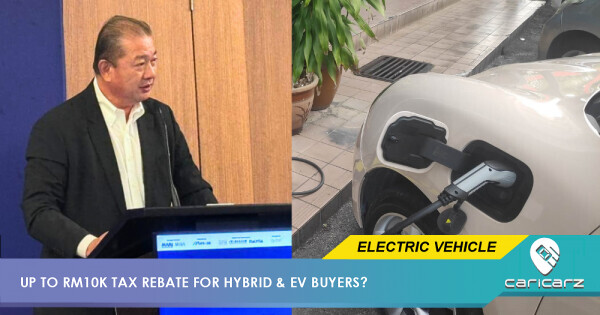
Buying A Hybrid Or EV? MAA Proposes Up To RM10,000 Tax Rebate
MAA proposes a RM7,000-RM10,000 income tax rebate for hybrid and EV buyers under Budget 2027, plus incentives for home charging and old-car scrapping.
28-09-2026
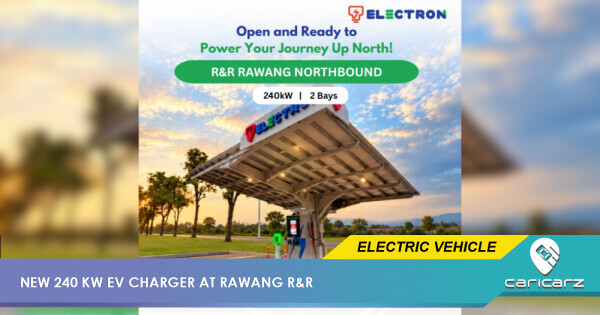
Driving Up North In An EV? There's A New 240 kW Charger At Rawang R&R
TNB Electron's new 240 kW DC EV charger at R&R Rawang Northbound is now live, with free charging available until 29 Sept 2026.
28-09-2026
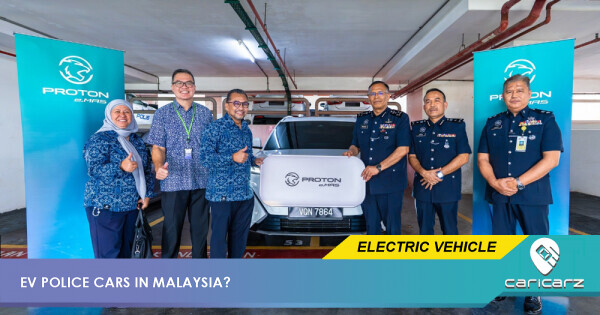
Could An EV Really Work As A Malaysian Police Car? PDRM Is Finding Out
PDRM is testing the Proton e.MAS 5, e.MAS 7 EV and e.MAS 7 PHEV to see whether electrified vehicles could work for Malaysian police duties.
18-09-2026
Malaysia's Electricity Protection Is Now 800 kWh - How Much Power Does An EV Use Per 100 KM?
Malaysia's electricity protection threshold is now 800 kWh. Here's how much electricity popular EVs use per 100 km and what the extra 200 kWh means.
18-09-2026
17 New Mercedes Models Are Coming To Malaysia In 2027 - Here's What We Know
Mercedes-Benz Malaysia plans 17 new models for 2027, with most set for local assembly in Pekan. Here's what we know about its ICE and EV plans.
17-09-2026
Perodua QV-E Now At RM53,499 Vs Proton e.MAS 5: Which Makes More Sense?
Perodua QV-E now starts at RM53,499 with BaaS under its Malaysia Day promo. See how it compares with the Proton e.MAS 5 on price, range, charging and features.
16-09-2026
Yes, Tan Chong Is Involved In Perodua's EV. Here's What It's Actually Doing
Tan Chong has signed a three-year agreement to support Perodua's EV production with ED coating, painting and assembly-line services.
15-09-2026
Show More
trending_flat